EDITORIAL PERSPECTIVE
Testosterone: The Hormone Behind More Than Masculinity | Part One
What testosterone does, how it changes with age, and why one result doesn't tell the whole story.
By Renaldo Pool, BHSc
Introduction
Testosterone replacement is a known intervention for clinically confirmed low androgen levels that profoundly impacts the quality of life of men, especially in the case of primary hypogonadism. But it has recently received increased attention, often suggested as a routine supplement and optimization tool to improve strength, increase libido, and enhance overall performance. Additionally, in society's view, maintaining optimal testosterone levels throughout a male's life has also been associated with maintaining masculinity and general vitality or youthfulness.
But as men age and testosterone levels gradually decline, it doesn't necessarily indicate poor health or that lower-than-normal levels require immediate intervention or correction. Several factors can also contribute to lower testosterone levels, which matters for context when questions arise: why is it low, are there accompanying symptoms or signs, and is it truly clinically relevant?
For these reasons, the first part of this two-part article series covers various aspects of testosterone: the cultural and societal perspective on testosterone and masculinity, its production, how it works and what it does, the interplay between hormones such as free and total testosterone and SHBG, the impact of low testosterone on the whole-body system, and what other contributing factors can influence your testosterone levels.
For your convenience, use the table of contents below to navigate to sections that pertain to you.
Testosterone, Masculinity, and the Optimization Ideal
The societal and cultural perspective that testosterone is associated with masculinity stems from the role that testosterone plays during the development of male sexual maturation, puberty, facial and body hair, muscle growth, voice deepening, and reproduction or virility. Along with other aspects such as productivity, performance, high energy levels, and a more psychosocial perspective on what it means to be a man, driven by societal views.
Although optimization-driven testosterone supplements are not a new topic, this perspective has recently gained traction again, framing testosterone supplementation as a means to optimize overall male performance.1 For instance, it may be presented as enhancing productivity (staying performative with high energy), sexual performance, overall confidence, competitiveness (particularly in sport and exercise), and promoting anti-aging or retaining youthfulness. This marketing approach might promote a supplement or hormone replacement, promising far more than current evidence or guidelines support as its intended use.1,3
However, we should distinguish between contextual testosterone levels - considering age and other relevant factors - and when pharmacological support is actually required.
With clinically low testosterone, as seen with confirmed hypogonadism, the proposed intervention method addresses the low availability of this hormone to restore it to physiologically normal levels, not to optimize for enhanced muscle growth and recovery during athletic performance, or as a preventive measure for anti-aging and what is associated with it.3
Is Testosterone Tied to Identity: A Psychosocial View
Because of the cultural and societal perception that testosterone is associated with strength, masculinity, performance – whether sexual or in a man’s ability to accomplish various tasks – confidence, and vitality, as well as its association with being manly,2 it is easy to understand why many men may begin to tie their testosterone status to this perspective.
Moreover, social media and wellness culture may further promote this image by portraying low testosterone as a loss of masculinity, performance, and youthfulness,2,3 rather than discussing testosterone's overall role in the context of its physiology, aging, and health.3
When men see this view of what testosterone is associated with and are made aware of declining levels as they age, along with the additional challenges and changes they experience with aging, it may take on greater meaning to them, especially during midlife.2 Current literature suggests that only small or domain-specific associations have been found between endogenous testosterone status and physical or cognitive performance,11 while other recent evidence does not support the association of low testosterone as a simple or direct explanation for a midlife crisis.
Psychologically, however, changes that may occur during midlife, such as declining physical strength, reduced sexual performance, shifts in emotional state, and changes in body composition, or even the presence of potential clinical hypogonadism, may be experienced by some men as a loss of their masculinity, vitality, and youth.2 Rather than seeing these as biological or health-related changes, men may view them as obstacles that alter their identity. In turn, social norms about what it means to be a man further exacerbate this.2
Testosterone status does not, by itself, explain the experience of a midlife crisis. However, cultural and social ideas of masculinity, youth, strength, and sexuality can alter the way males perceive the overlapping biological, relational, social, and psychological changes occurring during their midlife.
This is where testosterone becomes more nuanced than a mere laboratory value. You may ask yourself: are you experiencing a true deficiency, or are the normal changes of aging, and their societal association with masculinity, vitality, and youth, shaping how those changes are perceived?2
Testosterone’s Actual Role: A Physiological View
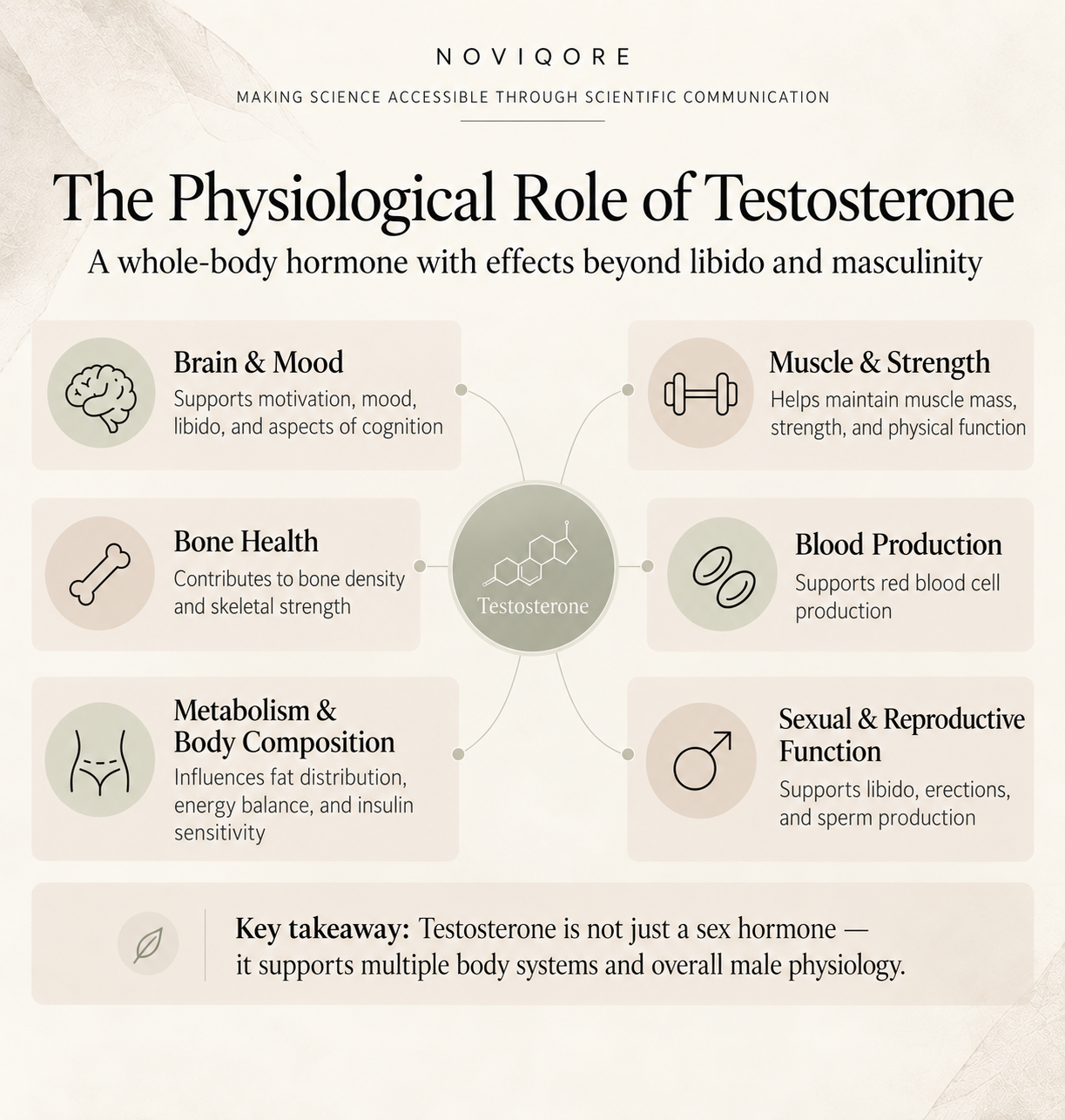
Testosterone's physiology is more complex than we think, as it works through different pathways and affects many parts of the body. Leydig cells in the testes produce it, and the hypothalamus-pituitary-gonadal axis regulates it.7
Think of your hypothalamus as the brain's control center, releasing gonadotropin-releasing hormone (GnRH), which in turn stimulates the pituitary gland to release follicle-stimulating hormone (FSH) and luteinizing hormone (LH).7 LH then stimulates Leydig cells to produce testosterone, and FSH, along with intratesticular testosterone, supports Sertoli-cell function to produce spermatocytes or sperm cells. In turn, increased circulating testosterone feeds back to regulate this system.
The three pathways that testosterone follows include8:
- Direct androgen-receptor signaling
- Conversion to dihydrotestosterone (DHT)
- The changeover to estradiol (E2) through aromatase
Other physiological changes include the development and maintenance of male reproductive tissues, libido and aspects of sexual motivation, support of spermatogenesis via intratesticular testosterone, and maintenance of skeletal muscle mass, strength,3 and neuromuscular function.7 In addition, testosterone maintains bone mass and architecture, stimulates red blood cell production (a mechanism called erythropoiesis), maintains fat tissue distribution and insulin sensitivity, and contributes to mood, motivation or drive, vitality, and certain aspects of cognitive function.7,11 Moreover, testosterone helps maintain skin thickness, oil (sebum) production, and hair follicle activity.11
Total testosterone contributes to the whole-body effect, but so do sex hormone-binding globulin (SHBG), free testosterone, albumin, androgen receptor sensitivity, and tissue-specific changes in DHT or estradiol.
Total, Free, and Bound Testosterone and Why SHBG Matters
Knowing the Different Testosterone Fractions
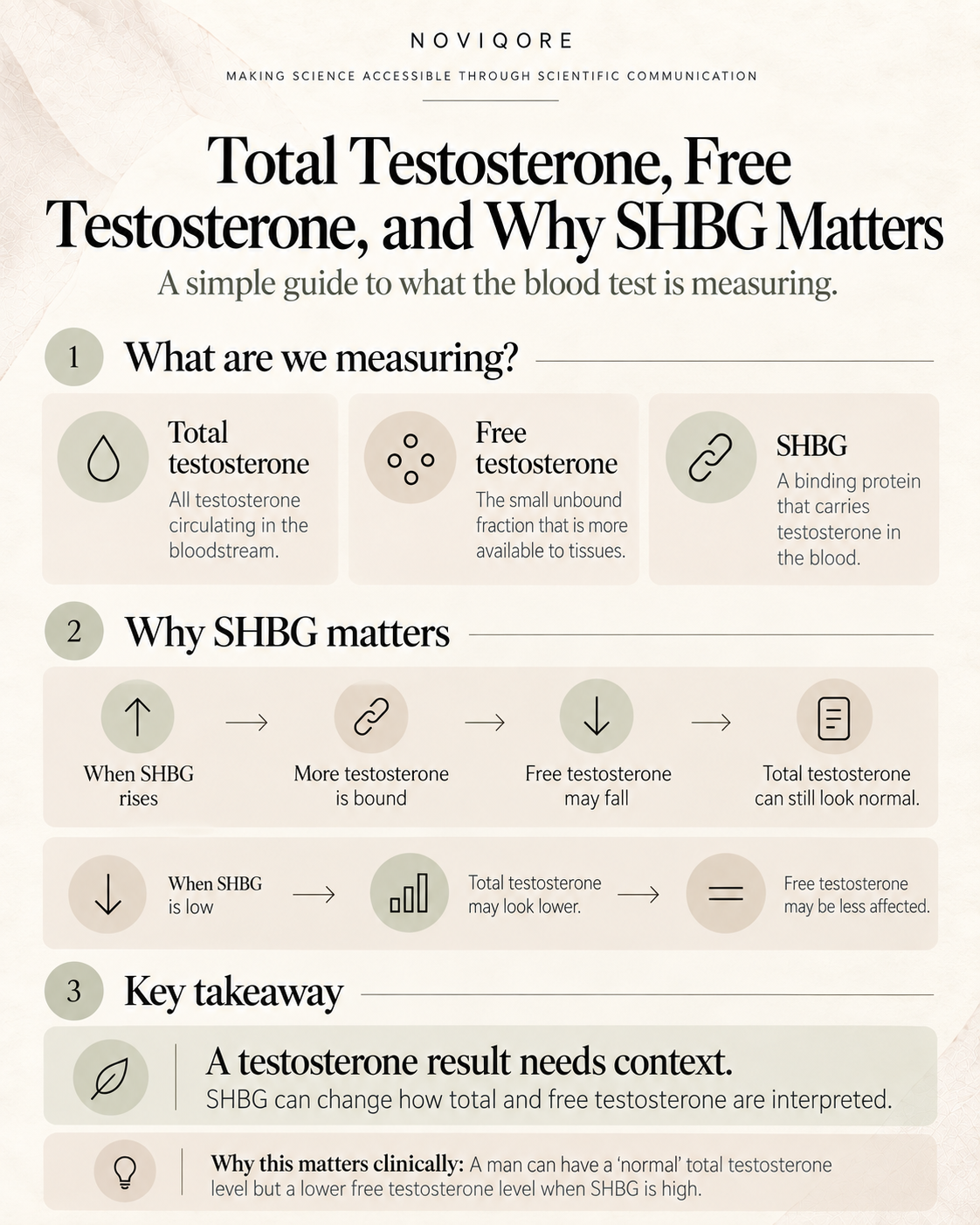
To measure circulating testosterone, a total testosterone test is performed, which provides an indication of the total testosterone present in your blood circulation – the bound and unbound versions.5 This also includes the percentage tightly bound to SHBG, the loosely bound portion to albumin, and a small section that remains unbound.5
This unbound portion makes up only 1-3% of total testosterone and represents free testosterone, which is also a separate measurable laboratory test.5 Free testosterone is also the portion that can easily pass through cell membranes to activate androgen receptors on various cells for a variety of functions.5
When we take a look at the part of testosterone that is bound to SHBG, we can also consider it as biologically unavailable, and this is why two men with the same level of total testosterone can also have different amounts of actual free testosterone available to bind to androgen receptors, because their SHBG levels vary.
Thus, free testosterone and the fraction loosely bound to albumin, also called bioavailable testosterone, better reflect the amount of testosterone available to move into tissues for androgen receptor activation.5
Total Testosterone
As males age, androgen levels and activity decline steadily; however, these changes vary from person to person and highlight why clinical context matters for each individual.8
When we consider these changes, we also need to examine the hormones and proteins involved in testosterone transport and binding, as well as factors that influence its production, activity, and availability.
With total testosterone, a decline may have multifactorial causes; in other words, various factors could contribute to low levels. Again, clinical history and symptoms should guide diagnostic investigations. Possible causes, other than aging, include6,8,9:
- A lower number of Leydig cells available
- Decreased sensitivity of Leydig cells
- Dysregulated Leydig-cell mitochondrial and steroidogenic function
- Elevated SHBG levels
- Increased adiposity and obesity, which also gives rise to more aromatase function in fat tissue
- Presence of chronic inflammatory conditions or illness
- Insulin resistance or metabolic dysfunction
- Disrupted sleep, sleep deprivation, as well as sleep-disordered breathing or apnea
- Medication use such as opioids, glucocorticoids, and anabolic steroids
- A decrease in physical activity and general movement
In addition, inflammation, cellular aging, and cell death in organs involved in SHBG and testosterone production and regulation could also affect the biological availability of these hormones and proteins.8 However, further investigation is needed, as the evidence is currently observational, experimental, or preclinical.8
SHBG-Bound Testosterone
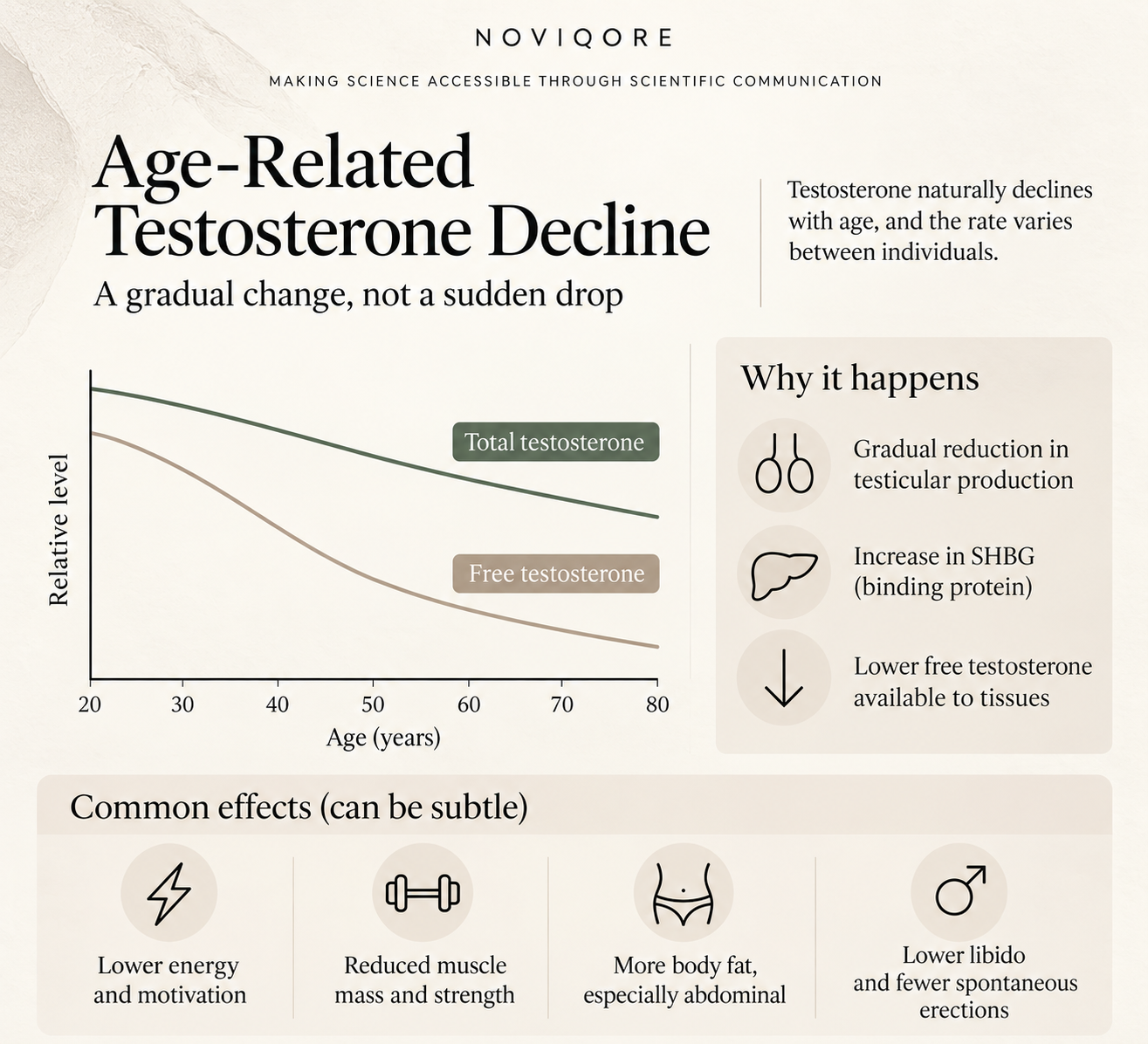
We also look more closely at SHBG, a protein mainly produced by the liver that transports testosterone and other sex hormones in the bloodstream. As men age, SHBG generally increases, reducing the free portion of testosterone available in circulation because testosterone becomes tightly bound to this protein.5,6 Although free testosterone decreases, total testosterone may remain unchanged or be slightly lower, as it reflects the total testosterone in circulation.5
Longitudinal research also noted an increase in SHBG with aging, with participants showing an SHBG increase over 4.3 years, a decline in calculated free testosterone, and a small change in total testosterone.5 Another study found that over 14 years, average total testosterone, estradiol, and estrone decreased, while SHBG increased; however, interindividual differences and other factors should also be considered, further highlighting the need to consider context and not deem age-related decreases in testosterone to a single cause.5,8
As with total testosterone’s multifactorial decrease, various factors can also affect the amount of available SHBG during biological aging.5 This can alter SHBG levels, which in turn affects how much testosterone is bound, transported, and available in circulation. Some of these factors include11:
- Reduced testicular and hepatic signaling
- Alterations to insulin function and signaling
- Dysregulated liver metabolism
- Thyroid Function and body composition changes
However, this is not as simple as one mechanism driving SHBG elevation and should be examined once thorough investigation identifies key contributing factors.
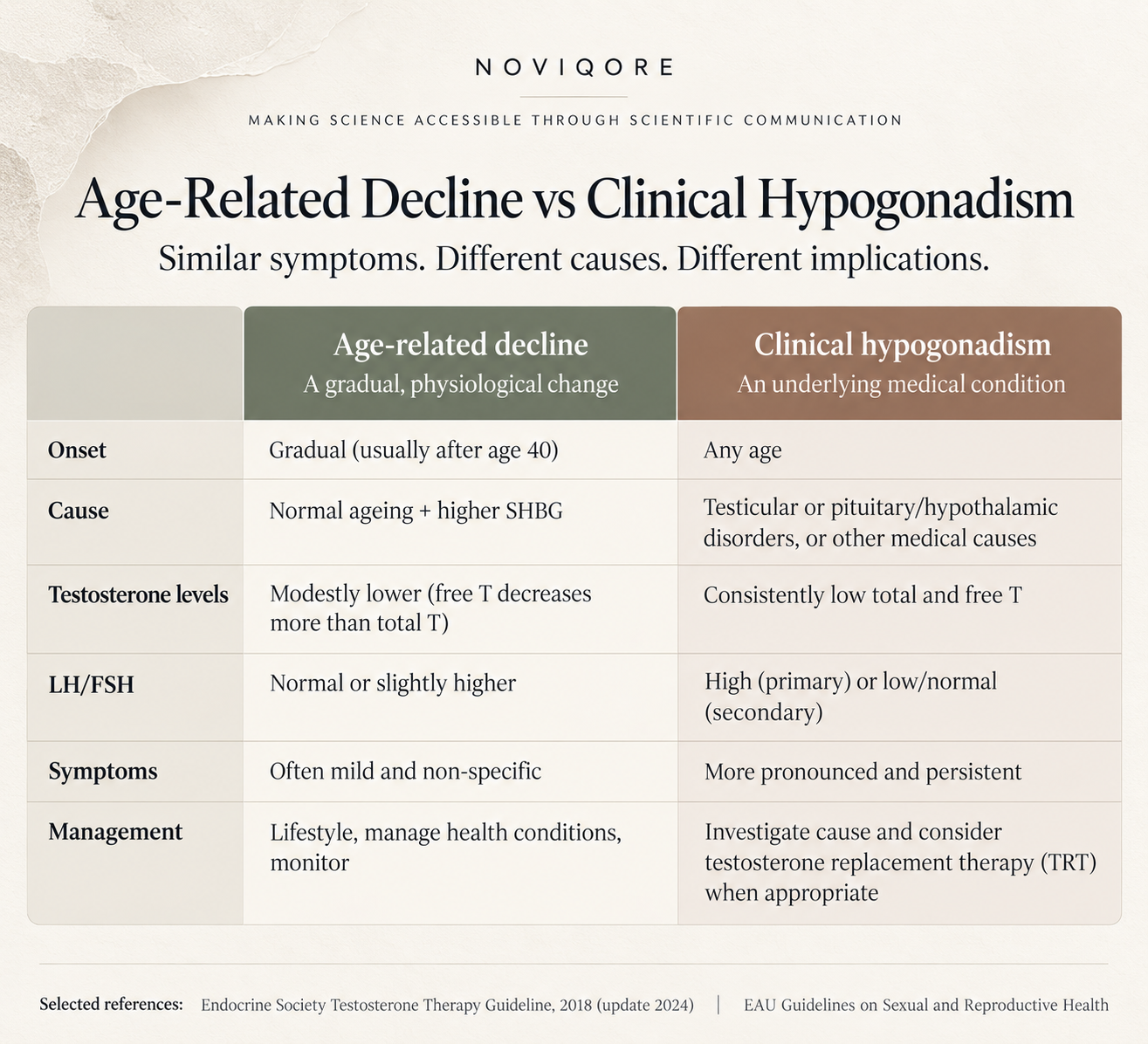
Things become interesting when comorbidities such as insulin resistance, metabolic syndrome, obesity, and Type II Diabetes Mellitus (T2DM) are present.5-7 In this case, SHBG may be clinically low, and total testosterone may also be low as a result of the lower SHBG.5,7 In this scenario, free testosterone may be low, normal, or only moderately reduced, depending on how much the hypothalamic-pituitary-testicular axis is suppressed,7,8 possibly influenced by the presence of a comorbid condition.5 LH and FSH may also be low or inappropriately normal in this context and could possibly indicate functional or secondary hypogonadism rather than primary or testicular-associated conditions.6,7,9
This clinical presentation is also important to note because free testosterone might offer more specific clinical insight into the cause of the androgen deficiency.5
Free Testosterone
When SHBG transports the testosterone molecules, it binds them tightly, lowering the amount of free testosterone in circulation, even though total testosterone remains “unchanged.”5 We can see this after diagnostic laboratory testing, where older males may present with a “normal” or within-reference-range total testosterone and low free testosterone. Thus, considering free testosterone measurement might be more clinically relevant to determine the presence and the possible cause of androgen deficiency seen with hypogonadism, especially in an older male age group.5,8
Clinically, this can be looked at in the following way:
Because SHBG is low, total testosterone may be disproportionately low compared with the free testosterone in circulation in some males experiencing obesity.5 This is where free or calculated free testosterone helps distinguish between7:
- True hypogonadism (low free testosterone with compatible symptoms);
- Obesity-associated low total testosterone without clear androgen deficiency (low total testosterone driven mainly by low SHBG, with free testosterone near normal).
To summarize this clinical picture:
- Aging men often show increasing SHBG levels and reduced free testosterone, while total testosterone remains within or close to the normal range.5,8
- Men with obesity, insulin resistance, or metabolic disease may have low SHBG, which can make total testosterone appear lower even when free testosterone is not significantly affected.5,8,11
Understanding the different types of testosterone and the glycoprotein that transports it is important for the next section, which discusses how aging and comorbid conditions influence them.
Aging Is Only One Part of the Story: Understanding the Impact and Influences of Low Testosterone Levels
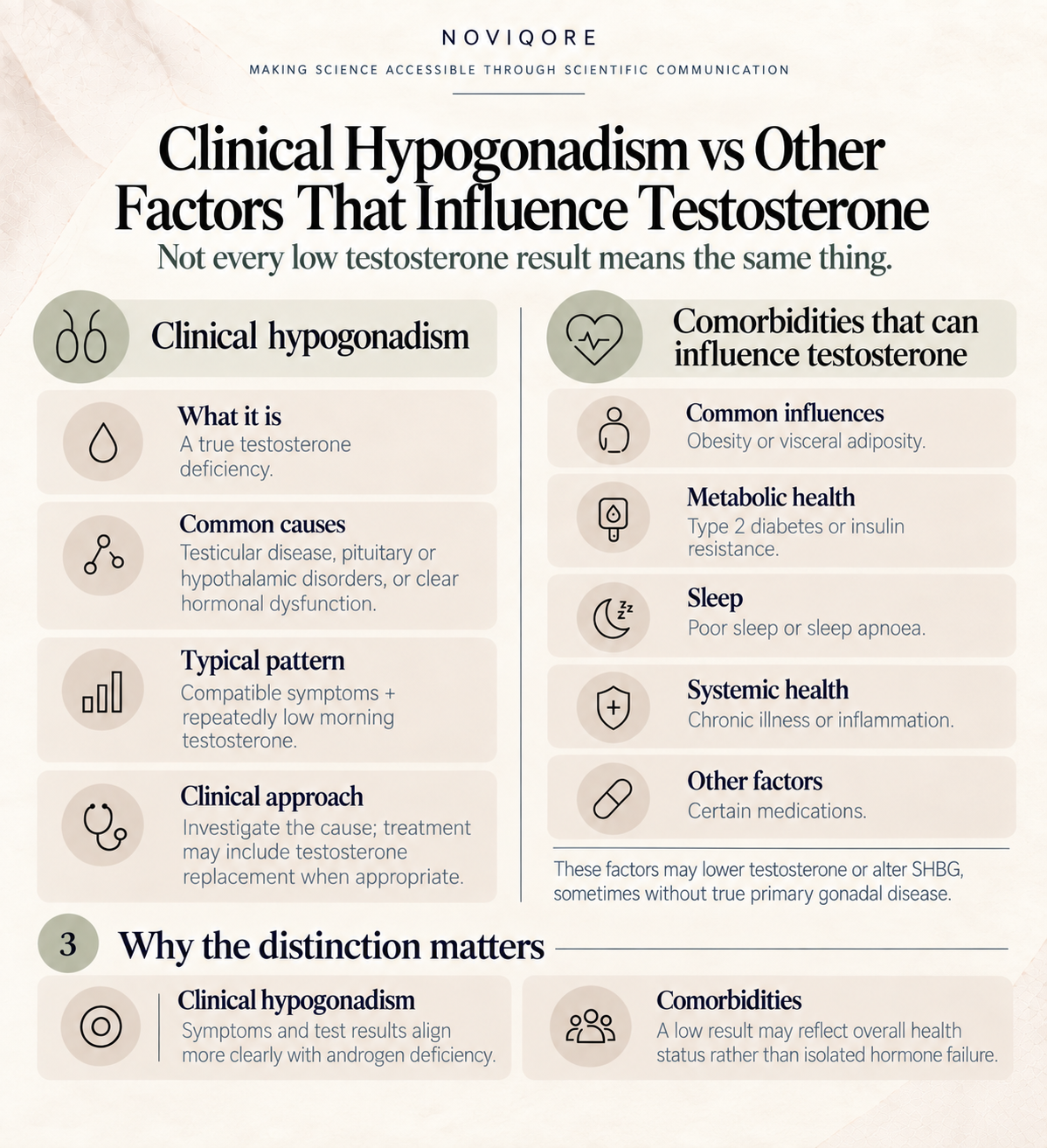
An important distinction is whether your symptoms, along with a gradual decline in testosterone, reflect normal biological aging or could possibly be exacerbated by an underlying condition.7,8 A key factor to consider is that testosterone levels below the normal reference cut-off value are not necessarily based solely on age-related symptomology.6 What might be construed as a “normal” age-related testosterone decline could actually reflect comorbid conditions that also impact the amount of testosterone produced or influence its bioavailability.6,7 Additionally, lowered testosterone might also indirectly hint at impaired or poor health.9
What Could Influence Testosterone Levels other than Aging?
Declining testosterone levels might be associated with the presence of comorbid conditions or chronic illness and are not necessarily considered to be the causative factor of these conditions.12 As we discussed previously, this distinction matters.
Metabolic Health Influence: Increased Weight
Increased central or abdominal adiposity in aging males is suggested to be associated with reduced testosterone levels.7,8 Fat tissue redistribution or weight gain can also affect metabolic functions, such as insulin release or sensitivity and triglyceride levels, and can lead to fatty liver. In turn, it can also lower available SHBG. Even when the testes still produce testosterone with normal LH and FSH levels, the metabolic changes above may contribute to a reduction in circulating total testosterone.7
Metabolic Health: Diabetes, Chronic Conditions, and Inflammation
In the presence of T2DM, cardiovascular disease, chronic kidney disease, metabolic syndrome, liver disease, chronic obstructive pulmonary disease (COPD), and cancer, these conditions influence testosterone production and circulating availability through their effects on the reproductive axis.6-9,11 This may partly reflect a continuous inflammatory state,9 dysregulated insulin signaling, altered energy balance, and medication side effects from treatments for these chronic conditions.7
Poor Sleep and Dysregulated Mood
Sleep apnoea, which can be obstructive while sleeping, has also been examined for its impact on testosterone production.6,12 Alongside disrupted sleep or sleep deprivation, depressive mood, low energy, fatigue, lack of motivation, and sexual interest present as an overlap with androgen deficiency symptoms; thus, these symptoms alone do not exclusively point to hypogonadism.12
Medication Use, Other Substances, and More
Use medications for chronic or acute conditions only as prescribed by a healthcare professional, and review common and rare side effects that may affect other aspects of your health. Certain medications can influence testosterone production as well as hypothalamic-pituitary signaling.6 These medications include11:
- Opioids, glucocorticoids, some psychotropic medications
- The unsupervised use of androgenic steroids
- The use of drugs or being diagnosed with a condition that influences prolactin
- Rigorous exercise schedule that can be considered excessive or too intense, and calorie restriction or calorie deficit lifestyles that negatively affect your health, including testosterone production or hormone signaling
- Your clinical history should also be reviewed to determine whether you have experienced previous testicular trauma, torsion, infection, chemotherapy and radiotherapy, cryptorchidism, infertility, or the possibility of pituitary disease.
This is why distinguishing between functional and organic hypogonadism is essential to discuss and share in the decision-making process regarding possible treatment,6,11 hormone replacement therapy or supplementation, and whether the signs and symptoms should be monitored in conjunction with diagnostic laboratory testing as a screening method.7
Biological Aging: Changes from Individual to Individual
Normal biological aging is a factor to consider when testosterone levels decline; however, this change is gradual and variable, differing from person to person.8 Although this change is not uniform across all males, it is also not necessarily pathological in the context of aging.6 The 2026 EAU guidelines also note that aging accounts for only a small amount of testosterone decline up to approximately 80 years of life.8 The comorbidities mentioned earlier are suggested to contribute the majority to the high prevalence of lowered testosterone levels in aging and older men.7,9,11
This is also where observational studies cannot determine whether low testosterone levels cause, correlate with, or lead to poor health in certain chronic conditions; further investigation and prospective research are needed on this specific topic.3,8,9,12
The Impact of Low Testosterone on the Whole-Body System
We will briefly look at the following aspects of your overall well-being when your testosterone has been clinically confirmed as being deficient.
Sexual and Reproductive Health
A lowered testosterone level can impact sexual interest, spontaneous erections, and general sexual satisfaction9; however, libido or sexual desire is more often associated with testosterone levels than erectile function.7,11 When erectile dysfunction occurs, it should be considered that various factors may influence it, such as endothelial dysfunction, comorbidities such as hypertension, diabetes, obesity,7 psychological factors, and certain medication side effects.9,11
Muscle Mass, Strength and Physical Well-Being
With a decline in androgen signaling, body composition can change in the following ways7:
- Decreased lean muscle mass
- Lower muscle protein synthesis
- Accumulation of fat, especially visceral adiposity
- Lowered strength, overall power or energy, and capacity during exercise
- You may become more susceptible to sarcopenia and frailty
Along with these bodily changes, mobility, balance, independence of movement, and quality of life can deteriorate. However, testosterone is not the only contributing factor, as vitamin D status, protein intake, neurological conditions, inflammatory conditions, and other comorbid factors also play a role.
Bone and Bone Health
Testosterone helps maintain bone health through direct androgen-receptor signaling and conversion to estradiol. Both testosterone and estradiol promote different parts of bone growth and maintenance and are therefore both considered important sex hormones for this function. However, when androgen activity decreases, bone mineral density may decline, bone microarchitecture may become dysregulated, and bone breakdown or turnover may increase.7,10 In turn, this may also increase the chance of incurring fractures.10
What is important to consider is that rectifying low or low-normal levels of testosterone through hormone therapy may show improvement in bone mineral density, particularly in the appropriate hypogonadal male population.10 However, it is not advised as a replacement for osteoporosis assessment or as a substitute for specific therapies used to prevent fractures.3,10
That said, a low testosterone level does not automatically mean an increased risk of developing osteoporosis, as other factors may also influence its onset, such as free estradiol, SHBG, glucocorticoid use, body weight, physical activity or inactivity, smoking, alcohol, and other chronic conditions.
Low Testosterone and Hemoglobin Levels
Testosterone normally participates in red cell production, called erythropoiesis. So, when testosterone is low, it can be related to the presence of unexplained anemia in older males.7 Testosterone treatment has been noted to improve anemia in primary hypogonadal men10; however, hormone replacement also increases the risk of overstimulation of red cell production, leading to an elevated red cell count, increased blood viscosity (thickness), and therefore requiring monitoring of hemoglobin and hematocrit levels.
Metabolic Effect
Decreased testosterone may also occur with high visceral fat, insulin resistance, metabolic syndrome, T2DM, reduced muscle glucose uptake, and chronic low-grade inflammation.7 This clinical picture is nuanced and difficult to interpret initially because it reflects a bidirectional causal relationship. In other words, while different comorbidities may suppress the hypothalamic-pituitary-gonadal axis and lower testosterone levels,7 decreased testosterone may also contribute to changes in body composition, metabolic dysregulation, and fat accumulation. Although clinical trials such as the T4DM trial have reviewed the effects of testosterone replacement in conjunction with lifestyle changes, other studies have not provided consistent results on glucose regulation,3,4 suggesting that testosterone replacement therapy (TRT) is not recommended for the general management of diabetes or obesity in men with normal testosterone levels.
Energy Levels, Emotions, and Cognitive Function
Alongside low testosterone, men may also experience a lower motivational drive, depressive symptoms, increased irritability, poor concentration, and a general sense of feeling unwell.7 Because these symptoms are non-specific and can overlap with other conditions, such as clinical depression, sleep apnoea, chronic illness, psychosocial stress, and medication side effects, it is important to consider your clinical history and the clinical context in which these symptoms present themselves.12
Moreover, different clinical trials have indicated slight improvements in emotional state and self-reported feedback on energy levels with testosterone replacement interventions, especially in instances where testosterone is clinically diagnosed as low.3,10 However, cognitive improvements are less pronounced, and larger studies have not shown reliable outcomes in memory or global cognitive function3; therefore, testosterone replacement is not recommended for dementia or biological cognitive aging.3
Cardiovascular Health
Although observational studies have found associations between low testosterone and comorbid conditions such as cardiovascular disease and mortality,7,8 low testosterone cannot be deemed the sole contributor or cause of these conditions,3 and might instead be considered an indicator of underlying conditions that require further investigation.8
What clinical trial studies have found is that, for specific demographics of men diagnosed with hypogonadism, TRT did not show an increased chance of men experiencing a major adverse cardiovascular event over a short-to-medium term, when compared to the placebo group in the trial.3,8 In contrast, the TRAVERSE randomized trial highlighted that testosterone replacement was found to increase the risk of atrial fibrillation, which means that TRT use also carries risk.10 This also suggests that TRT is not recommended as a cardiovascular disease prevention tool and requires risk assessment and monitoring.3
Influence on Skin and Hair
As mentioned in a snippet on hair loss, androgen signals influence the sebaceous glands, skin thickness, body hair, and scalp hair follicles. This is why, when testosterone decreases, men might experience thinner skin and less hair; along with DHT sensitivity, it can stimulate androgenic hair loss on the scalp,12 even when circulating testosterone is low-normal or even normal.
Given testosterone's whole-body effects across multiple organ systems, the clinical distinction of low testosterone levels is essential, as it depends on whether laboratory results and symptoms align with normal or variable biological aging, pathological hypogonadism, or age-associated multimorbidities.8
Conclusion
Understanding testosterone physiology, the biological changes that affect it, and the multifactorial influences that can alter its levels is necessary for a complete perspective on the potential reasons for low testosterone levels.
In the next part of this two-part article series, we examine not only whether testosterone is low but also whether a low result is clinically relevant, depending on the context.
This brings us to the most important discussion: whether hormone replacement is appropriate for all males with low testosterone.
Reference List
- George M, Modgil V, Pearce I, Stasinou T. Social Media and Men’s Health: Separating Science from Speculation in Andrology. Basic and Clinical Andrology. 2025;35(1):28. doi:10.1186/s12610-025-00275-0
- Gram EG, Mintzes B, Copp T, et al. Selling masculinity – A qualitative analysis of gender representations in social media content about “low T.” Social Science & Medicine. 2025;393:118903. doi:10.1016/j.socscimed.2025.118903
- Grant B, de Silva NL, Gumssani M, et al. Discordance Between Online Information and Male Hypogonadism Clinical Guidelines: A Global Multilingual Content Analysis. J Clin Endocrinol Metab. 2026;111(6):1651-1663. doi:10.1210/clinem/dgaf689Society E.
- Testosterone alone is not a replacement for lifestyle changes in older men at risk of T2D. Endocrine Society. https://www.endocrine.org/news-and-advocacy/news-room/2026/wittert-press-release-endo-2026?utm_source=chatgpt.com. Published September 9, 2026.
- Walravens J, Snaterse G, Narinx N, et al. Age-Stratified reference ranges for directly measured serum free testosterone in Community-Dwelling and healthy men. The Journal of Clinical Endocrinology & Metabolism. 2025;111(3):e787-e793. doi:10.1210/clinem/dgaf507
- Muir, C. A., Wittert, G. A., & Handelsman, D. J. (2025). Approach to the Patient: Low Testosterone Concentrations in Men With Obesity. The Journal of clinical endocrinology and metabolism, 110(9), e3125–e3130. https://doi.org/10.1210/clinem/dgaf137
- Huang X, Zhao H, Wu X, et al. Mechanisms of Leydig Cell Aging and Obesity-Related Hypogonadism in Men: A Review. Med Sci Monit. 2025;31:e948180. Published 2025 Aug 3. doi:10.12659/MSM.948180
- Yeap BB, Marriott RJ, Dwivedi G, et al. Associations of Testosterone and Related Hormones With All-Cause and Cardiovascular Mortality and Incident Cardiovascular Disease in Men : Individual Participant Data Meta-analyses. Ann Intern Med. 2024;177(6):768-781. doi:10.7326/M23-2781
- Corona G, Maggi M. The role of testosterone in male sexual function. Rev Endocr Metab Disord. 2022;23(6):1159-1172. doi:10.1007/s11154-022-09748-3
- Snyder PJ, Bauer DC, Ellenberg SS, et al. Testosterone Treatment and Fractures in Men with Hypogonadism. New England Journal of Medicine. 2024;390(3):203-211. doi:10.1056/nejmoa2308836
- Male hypogonadism - EAU Guidelines on Sexual and Reproductive Health - UrOweb. https://uroweb.org/guidelines/sexual-and-reproductivehealth/chapter/male-hypogonadism?utm_source=chatgpt.com
- Lee J, Park HJ. Indirect Associations of Perceived Stress and Sleep Quality in the Relationship Between Andropause Symptoms and Quality of Life Among Middle-Aged Men: A Cross-Sectional Study. Am J Mens Health. 2026;20(1):15579883251412966. doi:10.1177/15579883251412966