EDITORIAL PERSPECTIVE
Testosterone: When Low Levels Become Clinically Significant | Part Two
Understanding hypogonadism, its associated symptoms, the value of diagnostic testing, and when testosterone replacement may be appropriate.
By Renaldo Pool, BHSc
Introduction
More often than not, when a laboratory result comes back abnormal, even if it's subclinical, we tend to assume something is amiss and must be corrected. This can also be true for testosterone status.
In the first part of this two-part series, we examined testosterone in the context of biological aging, SHBG's role, the impact of declining or deficient testosterone on overall health, and the multifactorial causes of lower testosterone.
In this section, we shift from physiology and function to the clinical significance of low testosterone, examining the causes, required testing, when to consider hypogonadism, and whether testosterone replacement is appropriate.
For your convenience, use the table of contents below to navigate to sections that pertain to you.
When Does Low Testosterone Become Clinically Significant?
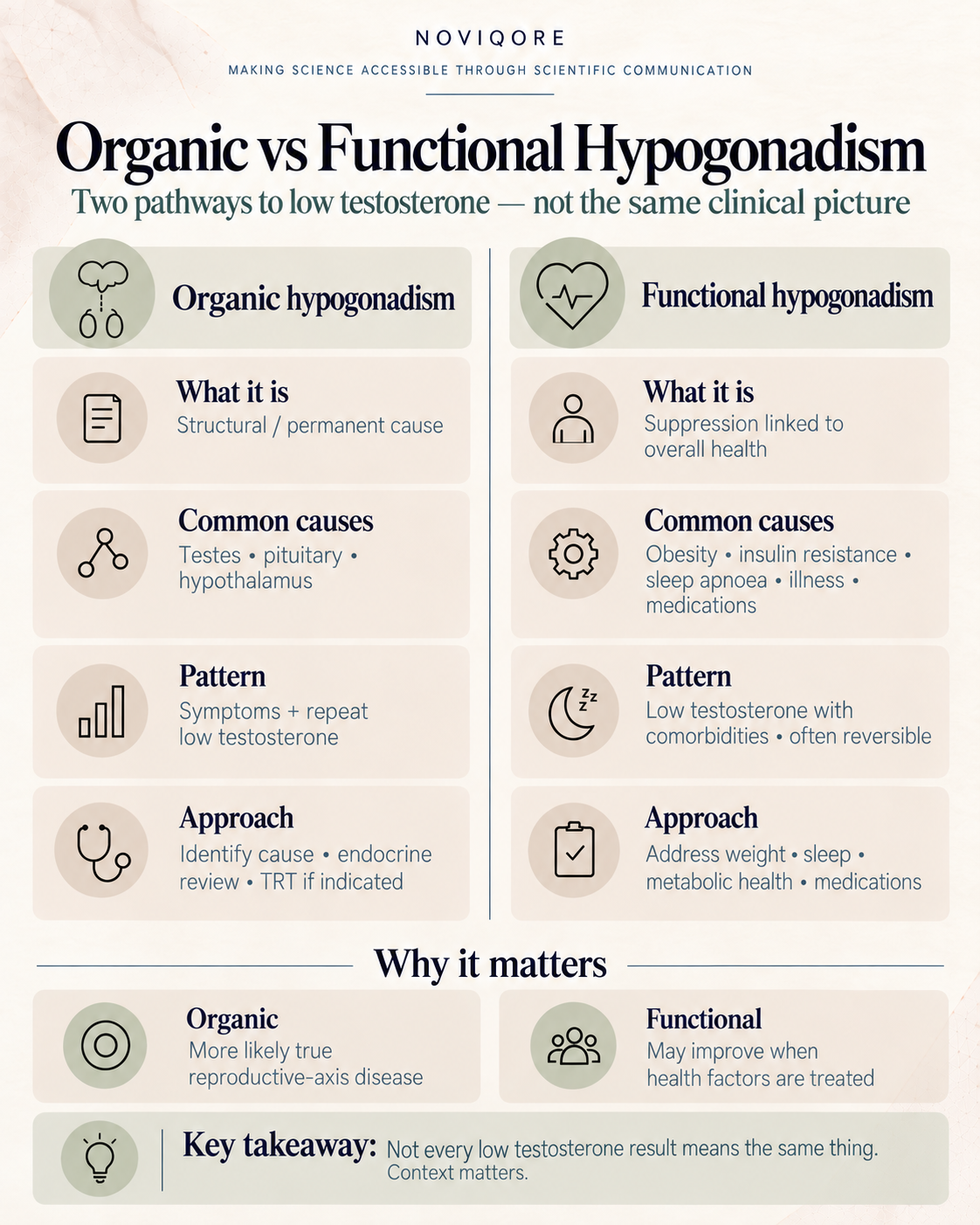
If you have persistent symptoms that could suggest testosterone deficiency, investigations begin with your symptoms and clinical context.1 Your consultation with a healthcare practitioner may include the following8:
- Symptoms and context are the starting point
Sexual symptoms, such as lowered libido and less spontaneous erections, are more specific signs than general fatigue or low energy.1,5 Assess body composition and any associated changes, along with sleep, mood, medication and alcohol use, chronic conditions, and future fertility plans.6
- Repeat measurement
Measure testosterone in the morning as a fasting sample, ideally between 07:00 and 10:00,1 because testosterone changes throughout the day (i.e., it’s higher in the morning than at night).7 This measurement should ideally be repeated on two different occasions before a clinically confirmed diagnosis can be made – repeat testing is recommended as testosterone is biologically and analytically variable.1,5 In addition, try to avoid having your testosterone tested when you are feeling ill, as this could influence the laboratory-measured result.
- Interpret the result accompanied by an SHBG and free testosterone measurement
Different factors can influence SHBG levels (as mentioned in Part One), which in turn affect the interpretation of total testosterone levels and free testosterone.1,5,7
- Further investigation might include LH and FSH measurement
To distinguish between primary testicular failure, where LH/FSH might be elevated, and secondary hypogonadism, where low or inappropriately normal LH/FSH may suggest functional suppression or related to hypothalamic/pituitary disease.5,7
- Investigate and eliminate multifactorial causes
Depending on the suspected underlying condition,1 different laboratory tests may be appropriate to request during this investigation.
- Examine possible reversible or lifestyle changes as first-line intervention
Weight management,3 sleep treatment, medication review, diabetes care, mood treatment, and management of systemic illness may improve both symptoms and testosterone physiology.7
What’s the Difference Between Organic and Functional Hypogonadism?
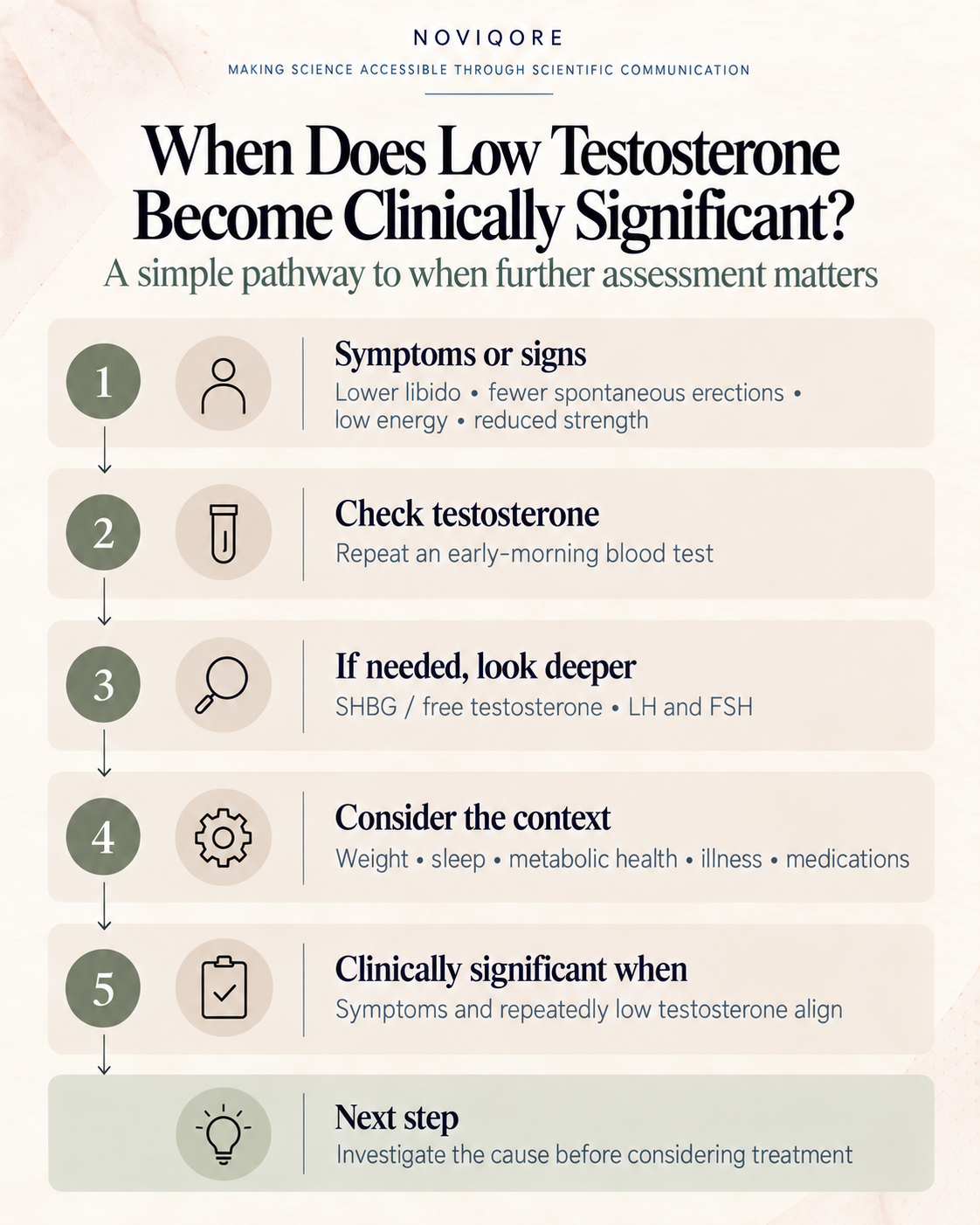
This is why, when clinical hypogonadism is investigated and diagnosed, it is not based on only one measurement of testosterone. The 2026 guideline by the European Association of Urology (EAU) refers to male hypogonadism as presenting with symptoms or signs along with biochemical proof that testosterone is, in fact, deficient.1,5,7,8
The reason for this guideline is to determine whether you might be experiencing an organic case of hypogonadism, which can be a permanent structural or irreversible condition or damage of the testes, pituitary, or hypothalamus.1,3,5,8
Or to identify whether you might have functional hypogonadism, which is when comorbid conditions or general poor health might affect the hypothalamic-pituitary-testicular axis.3,5 In functional hypogonadism, guidelines suggest focusing on the underlying conditions first before hormone replacement is considered.1,8
What Changes Men – and Their Partners – May Notice
With a change in testosterone levels to clinically low levels, accompanied by specific symptoms, the most evident changes include1,2,4,5,6,8:
Sexual
- Lower sexual desire
- Less spontaneous or morning erections
- Fewer sexual thoughts
- Decreased sexual satisfaction
- Infertility or lowered sperm production
It is also important to note that erectile dysfunction is not solely caused by clinically low testosterone and can also be influenced by cardiovascular disease, certain medications, depression, diabetes, relational stress, and other neurological factors.8
Physical
- Less motivation to exercise, lower exercise capacity, and slower recovery
- Muscle mass loss or reduced strength
- Increased fat distribution, especially around the abdomen
- Less body hair and skin changes
Psychological
- Struggling to concentrate
- A general lower motivational drive or feeling of vitality
- Feeling down, low mood, or increased irritability
Your partner, on the other hand, might notice changes in your intimacy, such as less initiation. They may also notice changes in mood, confidence, and daily energy. Because these signs and characteristics can overlap with other conditions, they do not necessarily indicate testosterone deficiency.
Confounding factors that could also contribute to these presentations mentioned include relationship tension, lack of sleep or sleep deprivation, comorbid conditions, current infections or illness, a stressful work environment, as well as the use of medications that have side effects.3 This highlights the importance of considering multiple factors and using a contextual approach when investigating testosterone deficiency.5,7
The complexity of low testosterone’s clinical significance, as we have previously mentioned, is that symptoms experienced and signs seen by men and their partners are not necessarily specific to testosterone deficiency.
This brings us to the final, essential section of the article, where we investigate whether testosterone replacement is necessary for each individual with low testosterone.
Is Testosterone Replacement Actually Necessary?
The answer is more nuanced than a simple yes or no.
Testosterone Replacement Therapy (TRT) is not an automatic and final intervention option for age-related testosterone reduction. This normal, biological alteration in testosterone status is not considered the same as pathological hypogonadism; thus, context, symptoms, and repeated low measurements should support a clinical confirmation of hypogonadism before treatment is considered.1,8
Another reason being that a lot of men with low-normal or even low testosterone levels do not always present with signs or symptoms, or are not considered to have a clinically significant deficiency, and, in turn, may not influence their overall quality of life.5,8
Longitudinal studies and randomized controlled trials also suggest using TRT only in specifically defined cases, such as clinically confirmed hypogonadism, and do not recommend it as a universal anti-aging or health-optimization tool, especially in a general aging and healthy male population.1,3,5,6,8
TRT implementation can be considered after repeated testosterone testing, clinical context, and accompanying symptoms, as well as taking the following into account:
Aging is Not Considered A Disease
If we look at the normal aging process and how testosterone behaves, it is more complex than making a generalized or universal decision that every older male should receive hormone therapy.1 This matters because testosterone declines gradually with age but varies from person to person,7 and because evidence for different age groups is insufficient at this stage, a specific cut-off range for testosterone status, by age group, is not supported.1,5 Furthermore, because of varying clinical ranges and grey zones when it comes to the clinical decision-making limits of what a true low testosterone deficiency is, it also proves challenging to provide a diagnosis and determine whether treatment should be recommended in this instance.5,6
Moreover, the European Menopause and Andropause Society (EMAS) also suggests that routine screening of testosterone levels is not recommended1; however, specific population groups, with conditions that may increase their risk of hypogonadism, should consider having their testosterone levels confirmed, including1:
- Individuals with HIV
- Symptoms affecting their sexual function
- Metabolic conditions
- Medication use, such as glucocorticoids and opioids
- Loss of bone density
- Male infertility
Comorbid Condition Presence and General Poor Health
It is also worth noting that males with generally good health seem to have a more gradual decrease in testosterone, over an extended period, than men with general poor health or comorbid conditions.3,5,7 Moreover, as noted, not all men experience signs and symptoms, and not all organs are affected by this hormonal change over time.7
Again, this is where longitudinal research has suggested that decreased testosterone, or very low baseline levels,3 may be likely to indicate poor health, exacerbated by comorbid conditions, rather than be a cause of specific clinical conditions.5
What TRT Can and Cannot Do: What Does the Evidence Suggest?
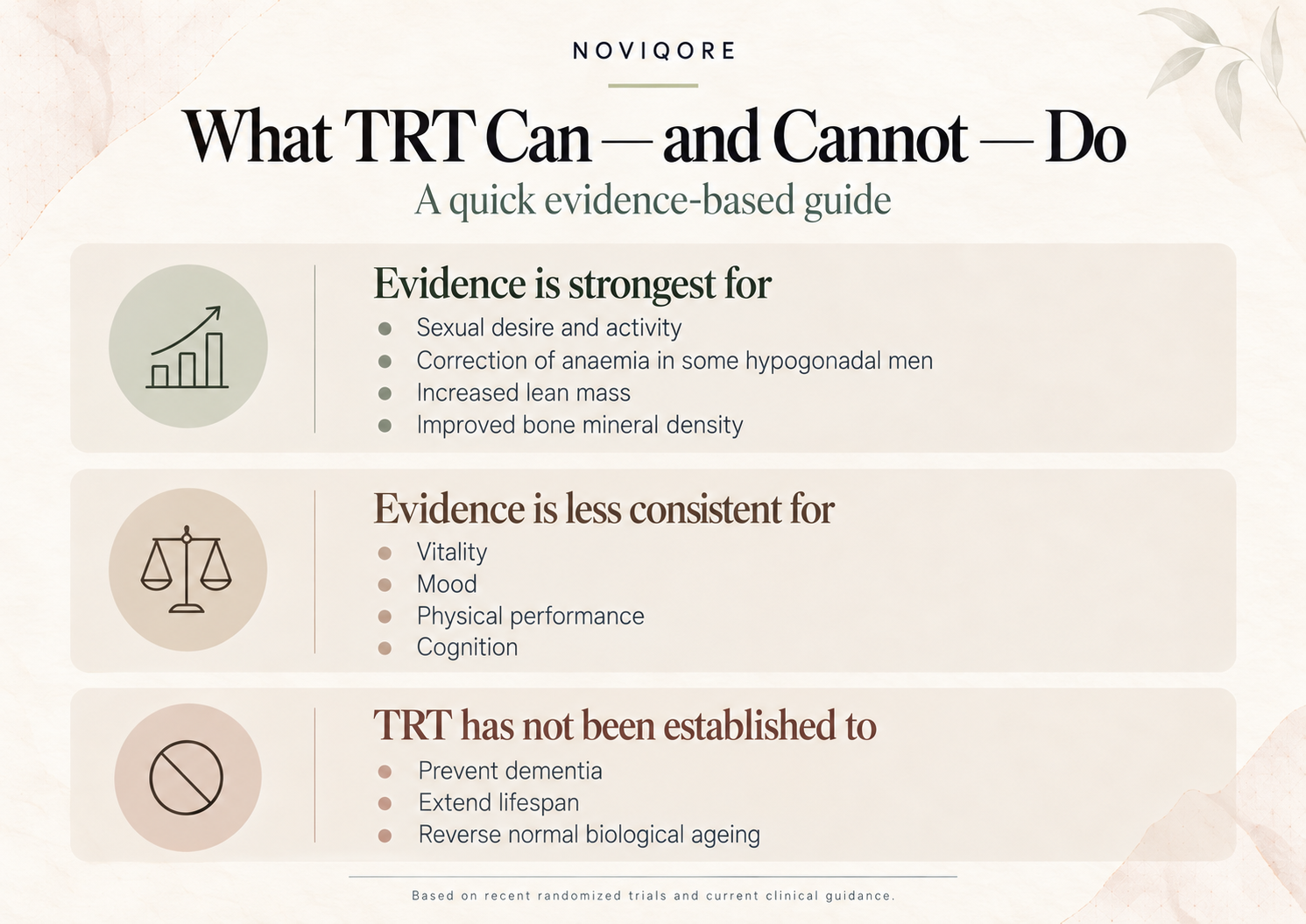
The 2025 guidelines of EMAS have indicated that TRT yields the clearest beneficial outcomes for older males with confirmed hypogonadism experiencing sexual dysfunction, in terms of improving desire and sexual satisfaction.2,8 This is also supported by the TRAVERSE trial, where a more consistent improvement in sexual function and desire was observed compared to placebo,2,3 as well as compared to other associated conditions that may contribute to testosterone deficiency.5,6,8
References: 2-5,8
Thus, an important takeaway is that aging and gradual testosterone decline do not mean hormone replacement is the first option to consider.5 Examine the clinical context, symptoms, history, and other causative factors, and follow an appropriate testing protocol.1,5 In some cases, men improve their health and well-being by addressing weight,3 sleep, and other lifestyle factors to rule out potential multifactorial causes of low testosterone levels.8
Future Fertility Plans? Something to Consider
TRT Use Is Not Risk-Free and Needs Monitoring
When exogenous testosterone is suggested, especially in cases where it might not be clinically required or is used as a supplement for enhancement, as with any medication or treatment, discuss potential risks and short- or long-term effects with a trusted healthcare professional.1,5
Consider your clinical history, age, symptoms, comorbidities, other medications you use, the duration of TRT use, the type of hormone replacement and route of administration, as well as the initial dosage and adjustment of dosages after continuous use and monitoring, especially in relation to safety, efficacy, and tolerability.1,5,6
Even though TRT may alleviate some symptoms experienced due to clinically confirmed hypogonadism,6 the following side effects should be considered4:
- Increased red cell production, which may be accompanied by elevated hemoglobin or hematocrit.
- Increased oily skin and acne development.
- Potentially elevated chances of atrial fibrillation, pulmonary embolism, or acute kidney damage in certain instances, as discussed for the testosterone group in the TRAVERSE trial.4,5
It is also advisable to continuously monitor your testosterone levels, prostate-related parameters, and hematocrit when treatment is started, as suggested by the latest EAU guidelines.4,5,8
When TRT is Not Recommended:
- Prescribed as a universal first-line intervention for all older males with a low or low-normal testosterone laboratory measurement.1,5,8
- As a quick-fix approach to anti-aging, performance improvement related to increased muscle mass or sport performance, or sharper cognition.1
- As a replacement for lifestyle adjustments, weight management, sleep, or chronic disease management.8
- For routine or daily use to improve brain function or prevent brain function decline, or improve exercise and mobility capability, especially if hypogonadism is not clinically confirmed.8
- Men considered to be high-risk, such as those with a history of prostate cancer, breast cancer, or pre-existing cardiovascular conditions, as well as elevated baseline hematocrit levels. Note: Inform high-risk individuals of the associated risks of hormone replacement therapy, given the lack of clinical safety evidence in these cases, and that extensive monitoring is required once treatment begins, as suggested by the EAU 2026 guidelines.8
Conclusion
Across both parts of this series, the message is simple: testosterone is essential, both for its normal physiological role and when it is deficient. However, you should not interpret testosterone status, along with possible symptoms, solely by a laboratory value or without a complete investigation; context matters.
This is where a low value could indicate true clinical hypogonadism, normal biological aging, dysregulated metabolic conditions, sleep disturbance, adverse effects from medication use, or more than one factor at once. Review the symptom presentation alongside clinical context and laboratory investigations to determine the underlying cause of your testosterone levels and whether a deficiency is clinically significant.
Investigate the cause, interpret the hormone and other accompanying test results, consider the clinical context, and treat the individual when required.
These steps are necessary when considering TRT as a targeted clinical treatment for a confirmed, clinically significant deficiency, rather than as a universal intervention for generalized symptoms and subclinical testosterone status aimed at enhancing cognition, improving vitality, preventing aging, and improving overall physical performance.
Reference List
- Khera M, Torres LO, Grober ED, et al. Male hypogonadism: recommendations from the Fifth International Consultation on Sexual Medicine (ICSM 2024). Sexual Medicine Reviews. 2025;13(4):548-573. doi:10.1093/sxmrev/qeaf036
- Pencina KM, Travison TG, Cunningham GR, et al. Effect of Testosterone Replacement Therapy on Sexual Function and Hypogonadal Symptoms in Men with Hypogonadism. The Journal of Clinical Endocrinology & Metabolism. 2024;109(2):569-580. doi:10.1210/clinem/dgad484
- Hudson J, Cruickshank M, Quinton R, et al. Symptomatic benefits of testosterone treatment in patient subgroups: a systematic review, individual participant data meta-analysis, and aggregate data meta-analysis. The Lancet Healthy Longevity. 2023;4(10):e561-e572. doi:10.1016/s2666-7568(23)00169-1
- Pencina KM, Travison TG, Artz AS, et al. Efficacy of Testosterone Replacement Therapy in Correcting Anemia in Men With Hypogonadism: A Randomized Clinical Trial. JAMA Netw Open. 2023;6(10):e2340030. Published 2023 Oct 2. doi:10.1001/jamanetworkopen.2023.40030
- Ravelli SA, Maseroli E, Vignozzi L. Hypogonadism in aging men: Impact of comorbidities, diagnosis and treatment. Maturitas. 2026;214:109124. doi:10.1016/j.maturitas.2026.109124
- Cruickshank M, Hudson J, Hernández R, et al. The effects and safety of testosterone replacement therapy for men with hypogonadism: the TestES evidence synthesis and economic evaluation. Health Technol Assess. 2024;28(43):1-210. doi:10.3310/JRYT3981
- Anawalt BD, Matsumoto AM. Aging and androgens: Physiology and clinical implications. Rev Endocr Metab Disord. 2022;23(6):1123-1137. doi:10.1007/s11154-022-09765-2
- Sexual and Reproductive Health. The European Association of Urology. Published 2026. https://uroweb.org/guidelines/sexual-and-reproductive-health/chapter/introduction-2