EDITORIAL PERSPECTIVE
When Prevention Becomes a Product
Why personalized wellness feels convincing – even when evidence remains uncertain.
What happens when the quest for better health becomes a continuous cycle of investigation, monitoring, and intervention - and how do we distinguish clinically meaningful preventive care from persuasive, commercialized personalization?
By Renaldo Pool, BHSc
Introduction
Health and wellness, as described by the World Health Organization (WHO), is a state of physical, mental, and social well-being, not necessarily the absence of disease or illness. Although a recent focal lens has been placed on longevity and wellness, which have influenced a holistic approach to health, the rise of wellness culture and an optimized lifestyle often frames overall health as an unfinished project; consumers are offered various products and services and left feeling they can always do more to ultimately prevent disease and biological aging.
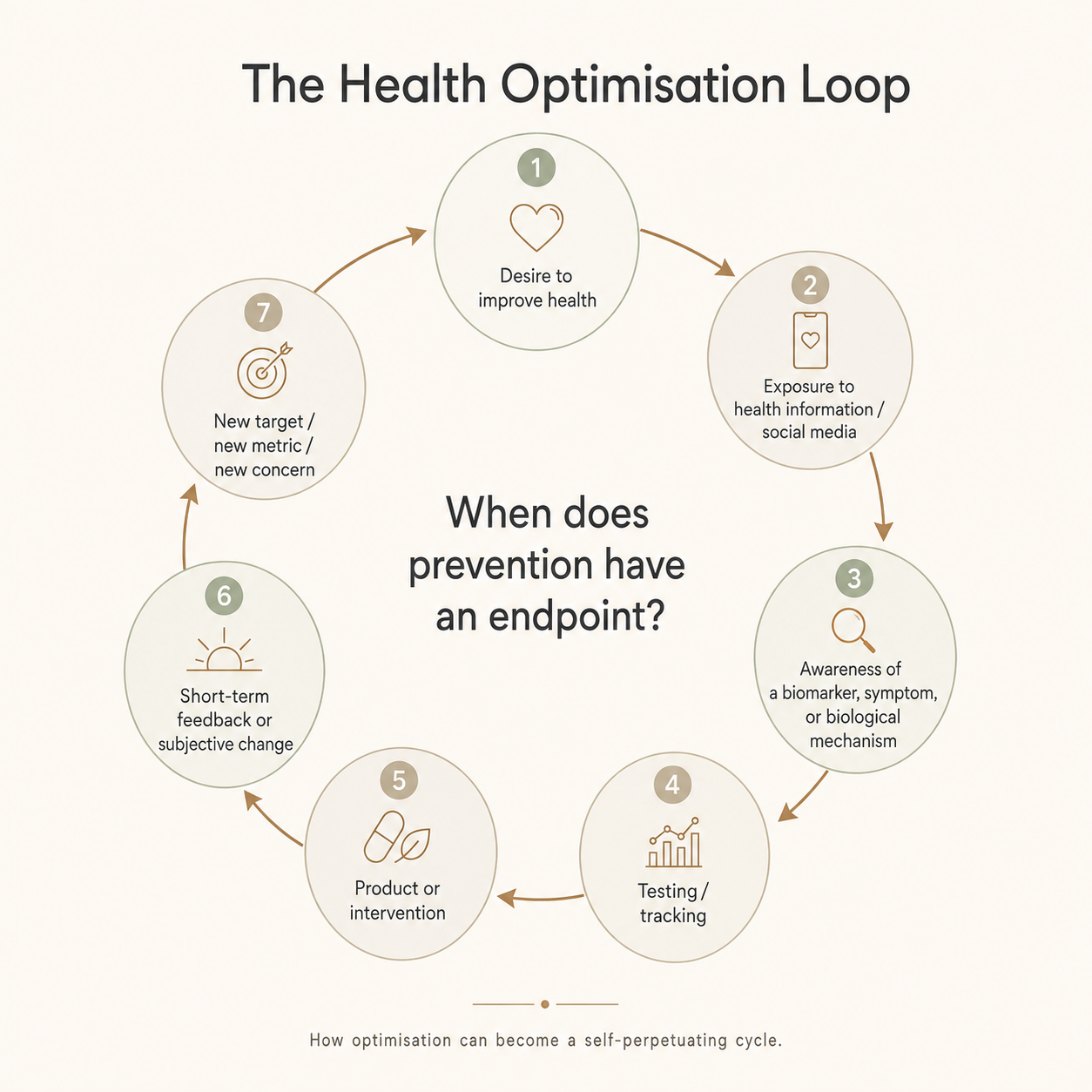
You could also experience this as a continuous cycle - what more can I do to ensure a balanced intake of nutrients and vitamins, a harmonious hormonal state, lower inflammation, a slower rate of aging, improved cognitive function as I age, and a more effective metabolic system? This is also where wellness and optimization culture promotes ongoing tracking, monitoring, improvement, meeting target scores, correction, and personalization in every health decision.
Throughout this article, preventive interventions, wellness products, and longevity services are not dismissed, as they are an emerging field that addresses gaps in conventional healthcare systems as experienced by patients and consumers.
However, what we focus on is recognizing the expanding wellness and longevity services and products available – and distinguishing between clinically supported or emerging evidence that requires further clinical investigations, and also what is being hyped through social media marketing contributing to a culture of continuous wellness consumption, instead of addressing a clinical concern.
For your convenience, use the content table below to jump to sections that pertain to you or that you want to know more about.
Health Evolution: The Noticeable Change
The biopsychosocial perspective on health and wellness, addressing general health and the social influences surrounding it, has also been linked to the continued global increase in life expectancy (Bonnes et al., 2024; Cocchi et al., 2025; Rodoreda-Pallàs, 2026). Although the global population is getting older, as discussed in various studies, a key topic is balancing gradual increases in life expectancy with good health in the final years of life (Bonnes et al., 2024; Callaway et al., 2025; Cocchi et al., 2025). Alongside this balance, health-related costs should not undermine the increased life expectancy seen worldwide (Callaway et al., 2025; Cocchi et al., 2025; Rodoreda-Pallàs, 2026).
But this is not the only change that has taken place over the years. Healthcare systems were once considered satisfactory for addressing patients’ health needs, but from the patient and consumer perspective, they now face increasing uncertainty, and their needs are not necessarily being met (Alemu et al., 2024). In turn, this drives a growing need for validation, prevention, more personalized and individual approaches, and rapid, deliverable outcomes (Rodoreda-Pallàs, 2026).
Conventional healthcare approaches can also be perceived as only addressing symptoms and offering action based on a diagnosis – in other words, being reactive, instead of preventative, treating instead of offering solutions to the root cause (Rodoreda-Pallàs, 2026). Another factor is that, although it is also considered risk-based, it can be seen as focusing only on acute care. In this context, misdiagnosis, overdiagnosis, and overuse of testing and treating methods should also be considered (Albarqouni et al., 2022; Rodoreda-Pallàs, 2026).
In addition, healthcare systems can be difficult to access due to socioeconomic factors and location (Alemu et al., 2024; Cacciatore et al., 2025; Ringel et al., 2025), only being available to those who can afford it or with health insurance that offers extensive coverage (Rodoreda-Pallàs, 2026); contact time or healthcare visits are often time-limited and restricted to a certain number of patients a day; and you may have your symptoms dismissed due to them not conforming to conventional frameworks or specific diagnoses.
Wellness marketing also often uses phrases like “your doctor missed these crucial signs,” which may not be the case; rather, in an often overburdened healthcare system, the time allocated to each patient is limited. Overall, patients also report that the focus is mainly on acute conditions and rapid relief, with little time for long-term investigation, discussion, or follow-ups to review changes and adaptations (Alemu et al., 2024; Rodoreda-Pallàs, 2026). Therefore, key insights to examine for future healthcare improvement include a patient-to-practitioner open channel of communication, health and wellness availability for individuals from all walks of life, a clear guided path to follow for health investigations and follow-ups, continuous care, preventive counselling, joint decision-making, decreasing overdiagnosis and over-screening (Albarqouni et al., 2022; Bonnes et al., 2024; Rodoreda-Pallàs, 2026), and an open understanding and discussion of emerging therapies, albeit supplement implementation, updated wellness programs, and when research-based findings are discussed, it should be discussed in a manner where patients fully comprehend (Alemu et al., 2024; Garmany & Terzic, 2024; Rodoreda-Pallàs, 2026).
The Need For Wellness and What It Means

Where the conventional health system may present with noticeable gaps, contemporary wellness culture has cultivated a space where it is addressed and alternative methods are invested in to fulfill a consumer’s unmet needs.
Some of these include:
- Addressing the limited time allocated for consultations
- Care from a practitioner that might feel fragmented, dispersed, and not fully committed to
- Ignoring symptoms that do not fit the clear diagnosis
- Where consumers and patients alike have ongoing fear regarding chronic disease
- Investing in a longing for personalized approaches with assistance and guidance offered
- Explanations required for test results that do not reflect the unwell state of the individual at the time
When looking at unmet needs of consumers, it often falls within presenting with symptoms that might not fit a particular diagnosis, such as chronic fatigue, irregular sleeping patterns, fractured memory or attention, fluctuating weight, low libido, ongoing stress, hormonal changes influenced by menstrual cycles, and the ongoing alterations associated with aging (Ringel et al., 2025; Karreman et al., 2026). These factors can affect overall health over the long term, although context and clinical history matter.
This is what makes wellness and longevity medicine appealing: it seeks targeted, thoroughly investigated interventions that address symptoms and may prevent conditions or diseases from developing (Ringel et al., 2025). It can also be portrayed as prevention before treatment is necessary (Bonnes et al., 2024). The controversial view is that, often, further investigation, experimental testing and procedures, ongoing consultations, and supplemental regimens can be justified through a commercialized approach, where clinical advice and care are not yet scientifically established or proven (Karreman et al., 2026). In other words, wellness and longevity approaches may address needs and provide testing and prevention methods with possible clinical uncertainty (Bonnes et al., 2024; Karreman et al., 2026).
Although longevity medicine is considered an emerging field that addresses an interdisciplinary need (Bonnes et al., 2024; Ringel et al., 2025), it requires future research, clinical trial studies, and reviews of its long-term associated impact, and it should not be based on mere persuasion to draw the attention of consumers (Bonnes et al., 2024). With wellness and longevity interventions focusing on aspects of healthcare that conventional systems might overlook, integrating them into routine clinical care requires further investigation before they can be fully utilized (Bonnes et al., 2024; Garmany & Terzic, 2024; Cocchi et al., 2025).
Optimization Culture: The Psychosocial Drive
Building on the previous section, which highlighted a societal need for autonomy, independence, and control over health and future wellness (Karreman et al., 2026), a further driver of a culture of optimization is the gaps in healthcare that the health and wellness market addressed and expanded.
To further elaborate on the modernized focus of society’s need for health optimization, we look at various factors:
- Because health decisions are often complex and require discussion and guidance from a healthcare provider, consumers may prefer easier, quick-fix options when available (Karreman et al., 2026).
- Decisions to purchase specific brands or join a particular wellness community are, in essence, motivated by social and emotional approval, along with a sense of taking control of your health (Hoffman & Tan, 2015; Islam et al., 2023; Pilli et al., 2024b; Karreman et al., 2026). In turn, this can also drive psychological reward processing (Hoffman & Tan, 2015).
- Following health optimization and wellness trends is often seen as a way to drive decision-making, highlighting what is referred to as the illusion of control and outcome bias (Hoffman & Tan, 2015; Pilli et al., 2024b), especially when you choose quick, immediate results over lifestyle changes that are synonymous with slower, less prominent outcomes at first.
- What could also feel like an illusion of control over one’s own health is the uncertainty contributed by erratic financial markets, politics, and other global affairs. For a consumer, having perceived control over their wellbeing can make one feel at ease – even if it is only one aspect of their daily life (Karreman et al., 2026).
- Moreover, implementing a whole-body lifestyle adjustment can be challenging, as it must account for work schedules and social, financial, and environmental factors (Cacciatore et al., 2025; Ringel et al., 2025).
- Views on normal biological aging have also shifted recently, with it now considered preventable or something that can be slowed to delay the development of specific age-related conditions (Bonnes et al., 2024; Ringel et al., 2025).
- Communication barriers for holistic approaches to health and wellness can also present as challenges when having to express these suggestions to consumers; for instance, explaining how and why lifestyle choices should initially be considered instead of immediate supplement implementation can be misconstrued, misunderstood, or simply not reach the specific target group it is intended for.
- This is also where social media and social influence might share information through generalized messaging about optimizing your health status (Powell & Pring, 2023; Karreman et al., 2026), adopting experimental, adjust-as-we-go methods, and highlighting trend-driven practices as socially acceptable (Hoffman & Tan, 2015; Pilli et al., 2024b), despite clinical and controlled trial evidence suggesting otherwise or lacking at this stage (Bonnes et al., 2024; Karreman et al., 2026).
- Healthcare systems and processes, including testing, analysis, and other risk-detection or screening methods, often unknowingly exclude certain population groups for various reasons, such as financial and environmental constraints (Alemu et al., 2024; Bonnes et al., 2024; Rodoreda-Pallàs, 2026). For instance, limited options or the expectation of excessive financial incentives from consumers for more specialized tests, alongside not being able to serve community or population groups in different settings, are other factors that prompt individuals to take their health into their own hands (Alemu et al., 2024; Ringel et al., 2025; Rodoreda-Pallàs, 2026).
Optimization Culture: Quick-Fix Thinking or Wholesome Health Focus
An important aspect mentioned earlier is the psychosocial influence of wellness culture, where quick fixes and immediate improvements drive the implementation of these new-age practices (Pilli et al., 2024b).
However, when wellness or longevity interventions are implemented, consumers might not see themselves addressing their perceived symptoms through easier-to-follow methods, but rather as long-term investments – in psychology, it touches on aspects of the Social Cognitive Theory – which involves observational learning through self and others’ behavior, self-control, self-efficacy, reinforcement, and behavioral capability (Islam et al., 2023). Another psychological aspect is the Health Locus of Control, where an individual may perceive control over their health and its outcomes, considering various factors and contexts (Mozafari et al., 2024). This may be seen in instances where an individual envisions an active pursuit of a wholesome health experience by addressing the main cause of symptoms, having responsibility and control over your own health (Hoffman & Tan, 2015) and providing attention to your body and its needs, decreasing medication dependence, focusing on preventive care before disease development occurs, and following methods that feels like a long-term investment in your health (Mozafari et al., 2024; Karreman et al., 2026).
These psychosocial perspectives can help consumers feel autonomy and responsibility for their own health (Hoffman & Tan, 2015), rather than viewing it as impulsive reactions (Mozafari et al., 2024). The concern is when preventive care is pursued extensively without considering clinical evidence or research-based outcomes, or when such evidence is lacking (Karreman et al., 2026).
What consumers can take into consideration when implementing preventive tools is:
- It should have realistic expectations and outcomes.
- Continuous monitoring and ongoing behavioral adjustment are necessary.
- It is essential to review the intervention method with a risk-to-benefit perspective.
- Clear clinical instructions or guidance are required.
- Alongside continuous monitoring, consumers should also recognize when a method is ineffective and be able to stop implementing it.
Available quick-fix tools often refer to the immediate availability of the product or service; in other words, you can implement or use it as soon as you receive it. The health benefits and outcomes do not necessarily target a specific symptom or condition but instead a wide range of systemic concerns, and they often have limited diagnostic value or do not reflect a clinically relevant outcome. Another quick-fix perspective is combining different methods or tools into one program, or one supplemental morning dose, also called stacking.
But What Do The Controversies Suggest?
Certain pitfalls or controversial evidence suggest that:
- When certain intervention methods are implemented, the perceived or expected effect, in other words, a placebo or contextual effect, comes into play (Tsutsumi et al., 2022). The specific wellness tool is perceived to offer greater advances and benefits than clinically indicated (Karreman et al., 2026). Objectively, the clinical effect could be smaller than the anticipated subjective perception (Tsutsumi et al., 2022).
- Consumers can focus on and rely heavily on specific markers and short-term “scores” or endpoints, where biomarkers are measured and directly correlated with a product's benefits. In some instances, the biological mechanism is sound, but clinical studies or longitudinal data for a specific product or ingredient do not necessarily support the “commercialized” claims (Karreman et al., 2026).
- When clinical data is available, wellness brands can also selectively use these findings or report confounding, low-quality results from poorly controlled studies to promote their product (Hoffman & Tan, 2015; Karreman et al., 2026). Often, marketing hype drives quick-fix products that promise promising results, even when larger trials do not reflect them.
- The associated risks, long-term effects, and harms can also be ignored or deemed irrelevant, especially when a product is marketed as natural or available over the counter (Allem, 2025; Karreman et al., 2026). This can lead to side effects and different biological interactions in individuals, and these findings are often not reported.
The takeaway from this section is to review the context for clinical use, your clinical history, and the safety and efficacy of a product or service before investing or committing (Ricke & Seifert, 2025). Consult a trusted healthcare practitioner before making lifestyle changes, adding any supplement, or engaging in wellness and longevity services (Bonnes et al., 2024). Products and services should preferably be scientifically backed and include clinical trial data explaining safety, dosage, and the biological mechanisms involved (Bonnes et al., 2024).
How Wellness is Framed and Sold: The Positives and The Questionable
This can be where wellness brands offer a solution to a problem you were not aware was a reason for concern, for instance, where mild symptoms are vaguely associated with a wide range of conditions – and you feel the need to act now, before it is too late.
When we look at the different ways in which wellness targeting overall improved health and longevity is presented and sold to consumers, it might look like this:
“Improve your hormonal balance and support your metabolic flexibility”
“Reduce chronic inflammation, while aiding detoxification, improving gut balance and mitochondrial health, and decreasing the rate of biological aging”
“Regulate your nervous system, reduce chronically high cortisol, improve brain health, and reduce brain fog”
Biologically, these concepts are linked to specific hormones, metabolites, pathways, whole body mechanisms, and systemic functions, which are clinically studied components of human physiology and its accompanying pathophysiology (diseased states); however, offering a product or service to rectify a biological process that can also be associated with a wide range of unrelated or non-specific symptoms can simultaneously intrigue a consumer to address it but also cause unnecessary fear.
In turn, it can also cultivate the need for a consumer to investigate it further, take matters into their own hands by self-supplementing or medicating and essentially overusing (Albarqouni et al., 2022; Ricke & Seifert, 2025), or attempting methods that, yes, sound medically safe and biologically make sense but also highlight and generalize symptoms that are unrelated to a specific condition or associated with many disorders. While this type of wellness and health message calls for consumer action (Lim et al., 2022; Powell & Pring, 2023), it uses a psychological strategy through marketing hype and social trends. (Pilli et al., 2024b), while the clinical overview and research-based evidence are sometimes unknown or not yet fully established (Lim et al., 2022; Karreman et al., 2026).
The availability of this type of health information through social media platforms can be further exacerbated by healthcare professionals who are knowledgeable educators and respected clinicians, as well as influencers, content creators, marketers, and sellers of their services or products (Lim et al., 2022; Pilli et al., 2024b; Ricke & Seifert, 2025; Zielińska-Tomczak, 2025; Karreman et al., 2026).
The positive outcome is that healthcare professionals can use social media to share medical and health information, debunk myths, and offer clinically sound guidance on addressing symptoms and conditions (Hoffman & Tan, 2015; Powell & Pring, 2023; Zielińska-Tomczak, 2025). It also provides information on lesser-known conditions or unspoken, and at times culturally inappropriate, topics, and can even decrease the stigma surrounding certain topics (Karreman et al., 2026).
Moreover, when a certified healthcare professional shares this information in professional language, refers to clinical studies, and follows laboratory-based testing protocols, it automatically builds safety, trust, and a willingness to learn more (Lim et al., 2022; Zielińska-Tomczak, 2025; Karreman et al., 2026). This is where Social Learning Theory comes into play: capturing attention, ensuring the information is understood, retained, and can be regurgitated, and motivating the consumer to take action (Hoffman & Tan, 2015; Lim et al., 2022; Islam et al., 2023).
However, while watching this kind of content, we also need to ask ourselves: Are we being offered clinically relevant recommendations? Are we being offered a service? And is this advertisement for a product or service applicable to me (Powell & Pring, 2023)? Moreover, as consumers, we also need to distinguish between what biological evidence, clinical trials, ingredient evidence, and product evidence indicate – there is more to it than expected (Bonnes et al., 2024; Ricke & Seifert, 2025).
The problem is not the advertising of products or services by healthcare practitioners (Lim et al., 2022); it is determining whether the clinically appropriate recommendations are made in good faith and transparently, and whether the recommendations are realistic, clinically backed, and, if there are conflicts of interest and uncertainty regarding a specific product or service, are they open for discussion (Ricke & Seifert, 2025)?Taken together, these discussion points show how sharing health content can become intricate, risky, and more nuanced than we thought (Lim et al., 2022; Powell & Pring, 2023; Zielińska-Tomczak, 2025).
The Controversial Outtake of Wellness Culture
With wellness and health content available across different social media platforms, it can serve as a valuable source of information and patient education (Zielińska-Tomczak, 2025); however, context is key (Lim et al., 2022).
This is also where healthcare professionals, who promote services and products related to general health and longevity, tap into their clinical experience and knowledge and can create a narrative where simple biological concepts and pathways are translated as though they require extensive (and sometimes unnecessary) investigation to simultaneously promote a service of monitoring and tracking biomarkers (Powell & Pring, 2023; Bonnes et al., 2024; Zielińska-Tomczak, 2025; Karreman et al., 2026).
In turn, clinically insignificant changes in biomarkers or lifestyle patterns might raise concern, and in certain circumstances, detected abnormalities prompt further investigation. On the other hand, consumers of wellness products and tools may feel obligated to constantly monitor biomarkers and symptoms. This can potentially negatively influence their quality of life, long-term health outcomes as a result of experiencing continuous anxiety or pressure (Hoffman & Tan, 2015), and altered daily functioning, which can further be driven by a psychological need to constantly meet that target, reach that goal, close that circle, track that measurand, and optimize or improve it whenever and however possible (Allem, 2025).
Services and products available range from wellness panel testing, biological-age determination through metabolome, transcriptome, and proteome studies, microbiome testing to monitor gut health, continuous glucose monitoring, sleep tracking, recovery metrics to optimize your exercise routine, IV drips for different needs, optimising hormone balance, peptides for various additive benefits, supplements for that extra boost, nootropics for improving cognitive function, and enabling a consumer to directly order tests from a laboratory (Bonnes et al., 2024; Cocchi et al., 2025), as if ordering a meal from a menu in a restaurant.
Although these intervention methods could pose valuable clinical insight for future advances in health, especially in longevity and personalized medicine, and can be paired with in-depth consultations with a healthcare professional or multidisciplinary team, these advances still need further investigation (Bonnes et al., 2024; Cocchi et al., 2025).
The concern arises when healthcare professionals offering a wellness product or service explain the underlying mechanisms and associated therapeutic methods as isolated biological concepts and persuade consumers to take a new supplement or register for a new lifestyle program, even though these methods require further clinical trials and scientific backing (Lim et al., 2022; Karreman et al., 2026).
This is where commercialization gets finicky, especially in healthcare.
Biologically Plausible but Clinically Proven?
To better understand the availability of extensive wellness and longevity marker testing services and associated products for optimizing health, we need to view them from different perspectives (Bonnes et al., 2024).
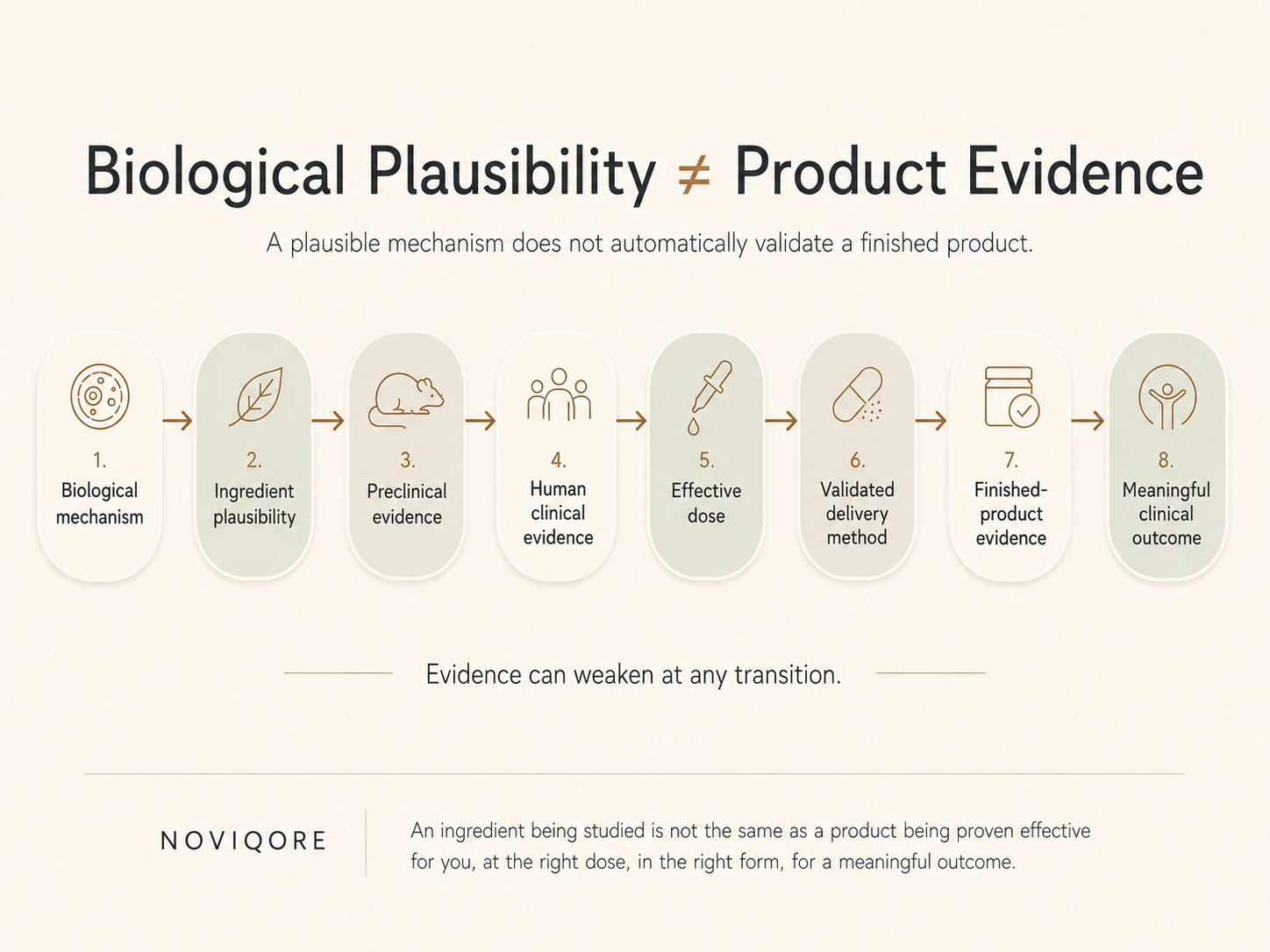
Often, recommended services and products address a range of symptoms that are non-specific to many conditions, whereby individuals can easily be persuaded to opt for these interventions to stay on track with their overall health.
The concern is that biological mechanisms are discussed in detail, with their related outcomes – if dysregulated or dysfunctional – and are usually backed by scientific research and clinical studies (Bonnes et al., 2024). In turn, it is paired with ingredients and products that have also undergone clinically relevant trials, showing how they can alleviate symptoms and improve these conditions (Ricke & Seifert, 2025). Even for a consumer with a science and biology background, it may sound scientifically justified (Karreman et al., 2026).
For instance, when we review a mechanism associated with stress regulation and an ingredient is highlighted that has shown clinically relevant outcomes in animals or in specific human population groups, a product containing this ingredient is then marketed through social media platforms, which could then be further suggested to improve health outcomes associated with dysregulated stress regulation.
Biologically? It sounds plausible. But has this clinically been proven?
This is where we need to review the clinically appropriate dosage, the recommended daily intake, bioavailability of the ingredient in the body, the absorptive mechanisms, most effective delivery method (certain brands might suggest transdermal patches based on previous clinically approved methods but it might not work for all ingredients), and has it been through the appropriate randomized clinical trials, along with determining what the side-effects and long-term outcomes are (Ricke & Seifert, 2025). Also, does this ingredient have a clinically meaningful impact on the condition or pathway it aims to target, considering whether it was tested in diverse population groups or only in healthy individuals (Ricke & Seifert, 2025)?
A few things to also consider are:
- Oral ingredients might not be delivered effectively through a transdermal patch or other delivery method.
- Clinical trials showing positive outcomes in a specifically deficient population or another specific group might not be relevant or have the same clinical impact in a healthy population.
- Ingredients in products may be available in lower amounts than those used in the clinical trial or, conversely, exceed the allowable upper limit intake (Ricke & Seifert, 2025).
The most important takeaway is not to dismiss emerging studies and future advancements in improving health, but to consider them in the context of the product or service being marketed and sold (Lim et al., 2022; Cocchi et al., 2025; Karreman et al., 2026). This is especially true when the marketing approach suggests fully research-backed improvements and outcomes that have not yet been established.
The Responsibility of a Personalized Approach
Even though health and wellness brands and businesses may promote their products and services as more personal, tailored, and consumer-focused than conventional healthcare systems (Cocchi et al., 2025), every consumer’s responsible for determining what that personalized approach entails.
Prior to adding a supplement, peptide, longevity program, extensive panel testing, and other wellness-related options to your daily routine, it could benefit to consider the following:
- Your clinical symptoms experienced
- Medical as well as family history
- Your age and current stage of life
- Medications that you are currently using or were using (in case of contraindications)
- Current diagnoses or conditions present
- Your lifestyle factors, such as diet, sleep, and physical activity patterns
- Environmental conditions and how they relate to stress tolerance and regulation
- Pregnant or menopausal
- Socioeconomic environment and considering your professional work demands and environment
- As well as your priorities when it comes to starting a wellness journey
It is also essential to bear in mind that even though lifestyle factors and environment influence health outcomes, genetics also play a role (Cocchi et al., 2025). Especially when it comes to being predisposed to certain conditions or the likelihood of having different outcomes than another individual, because everyone’s genetic makeup differs. Therefore, even though the tailored treatment, product, or service you apply might have a meaningful impact in the long run, it might not have the same clinical significance as a family member’s or a friend’s.
Moreover, two concepts that are important to distinguish between includes personalised medicine and personalised marketing:
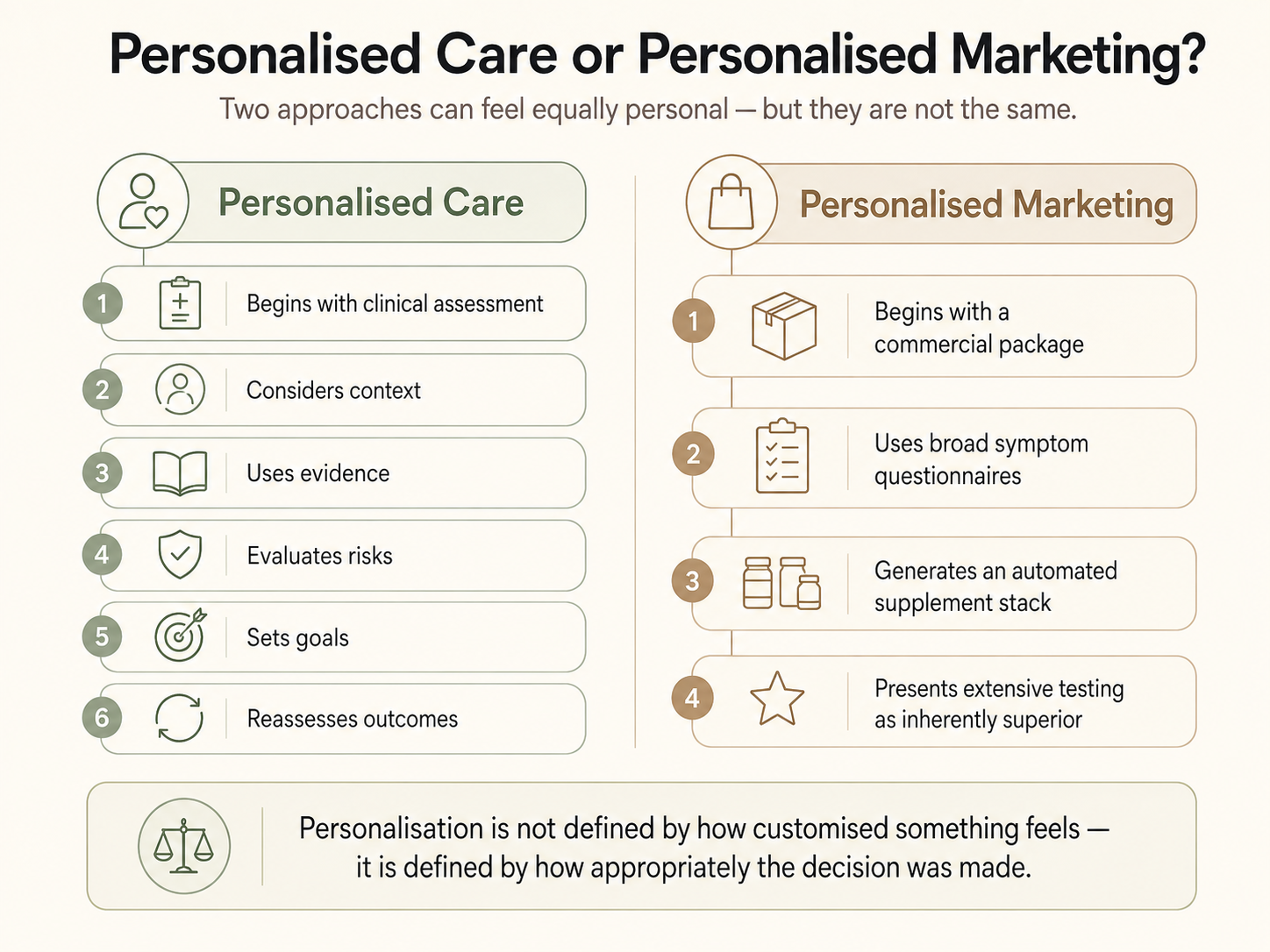
Therefore, when you decide on starting a wellness journey, your initial consultation with a trusted and registered healthcare practitioner should include topics such as:
- What the best available current evidence is, taking your family and medical history into account, as well as your symptoms and any prior or co-morbid conditions.
- What their clinical expertise suggests, considering your symptoms, your age, life stage, lifestyle, and environmental factors.
- Your current circumstances should be considered.
- Decide on what your preference is and what a realistic and goal-oriented approach is that you will adhere to (Pilli et al., 2024b).
- Eliminate any uncertainty about the intervention method or other related health-related concerns.
The best approach, a prospective developmental component of healthcare, brings the patient and the clinical practitioner together through shared decision-making about health outcomes (Bonnes et al., 2024; Pilli et al., 2024b).
But How Do I Know When a Service and Product Serves Me Best?
Even though some intervention methods are still more experimental than supported by substantial clinical data, they may become routine care; therefore, innovative solutions should not be dismissed because of current uncertainty (Bonnes et al., 2024).
However, consumers and patients seeking health and wellness tools should be directed toward established services and products, and a clear definition should be provided of whether the intervention method seems promising, is currently experimental, or is merely commercially available before suitable and efficient clinical data is available.
Knowing the difference:
- Established
Evidence for a wellness and health product or service comes from multiple human studies, with significant clinical outcomes, appropriate dosing, and medically indicated information. It also includes safety data and terms of use.
- Promising
These are products or services that are biologically plausible, with a few early human clinical trial data supporting the findings; however, recommended dosing and long-term benefits, as well as data for specific target population groups, are lacking or not clearly defined.
- Experimental
Wellness products and services that are tried and tested through limited animal models, theoretical, biological pathways and associations, or even based on anecdotal information – in other words, through consumer testimonies and observations (Pilli et al., 2024b).
- Commercially Amplified
This includes services and products that are commercially hyped via social media and consumer, or even healthcare professional, testimonies before clinically relevant or research-based study data is available (Lim et al., 2022; Pilli et al., 2024b). The evidence for these products can also be promoted as improving a wide range of non-specific symptoms associated with an array of conditions, as a preventive measure to ultimately optimize your health and wellbeing.
As a consumer, being open to these perspectives creates a framework to consider all relevant information about your needs before accepting that every innovative wellness product or service is clinically and medically established.
The last section of this article suggests questions you should ask before adding a longevity program, supplement, peptide stack, or IV infusion to your wellness regimen.
Something to Consider: A Product or Service is not Always Necessary for Intervention Purposes
Before you decide to optimize your health and overall well-being, take preventive measures, and consult a wellness service, have you looked at the basis and root of your symptoms?
Sometimes, addressing a range of symptoms can start with reviewing factors such as environment, stress regulation, and lifestyle factors like diet, exercise, and sleep patterns, to name a few (Cocchi et al., 2025). If symptoms persist, medical intervention may be an option.
Before implementing and starting a longevity or wellness program and product, determine what your core concern is – the prompts and questions below are often how products and services can be framed and marketed:
- Do you want to correct a nutrient deficiency through a wellness product blend that offers the necessary ingredients?
- Are you seeking performance-enhancing add-ons for exercise or cognitive improvement?
- Have you consulted a healthcare professional regarding experiencing hormonal imbalances during the onset of menopause, or have you already started taking a hormonal blend to reduce symptoms?
- Are you taking a multi-vitamin or multi-ingredient product as an adjunct for non-specific symptoms or reasons?
- Have you recently experienced severe dehydration, where you have had fluid loss, and are using an electrolyte replacement product?
- Have you implemented an infusion product as part of a longevity program based on theoretically plausible benefits but not clinically proven?
Therefore, being well-informed and having a choice in the decision-making process, along with consulting a trusted healthcare professional – and not necessarily what is marketed or promoted via social media endorsements (Lim et al., 2022; Pilli et al., 2024b) – might offer you a different perspective on how to address persistent symptoms.
The nuance to wellness products and services is distinguishing between the promise of broad intervention for non-specific symptoms and what is clinically relevant to your scenario.
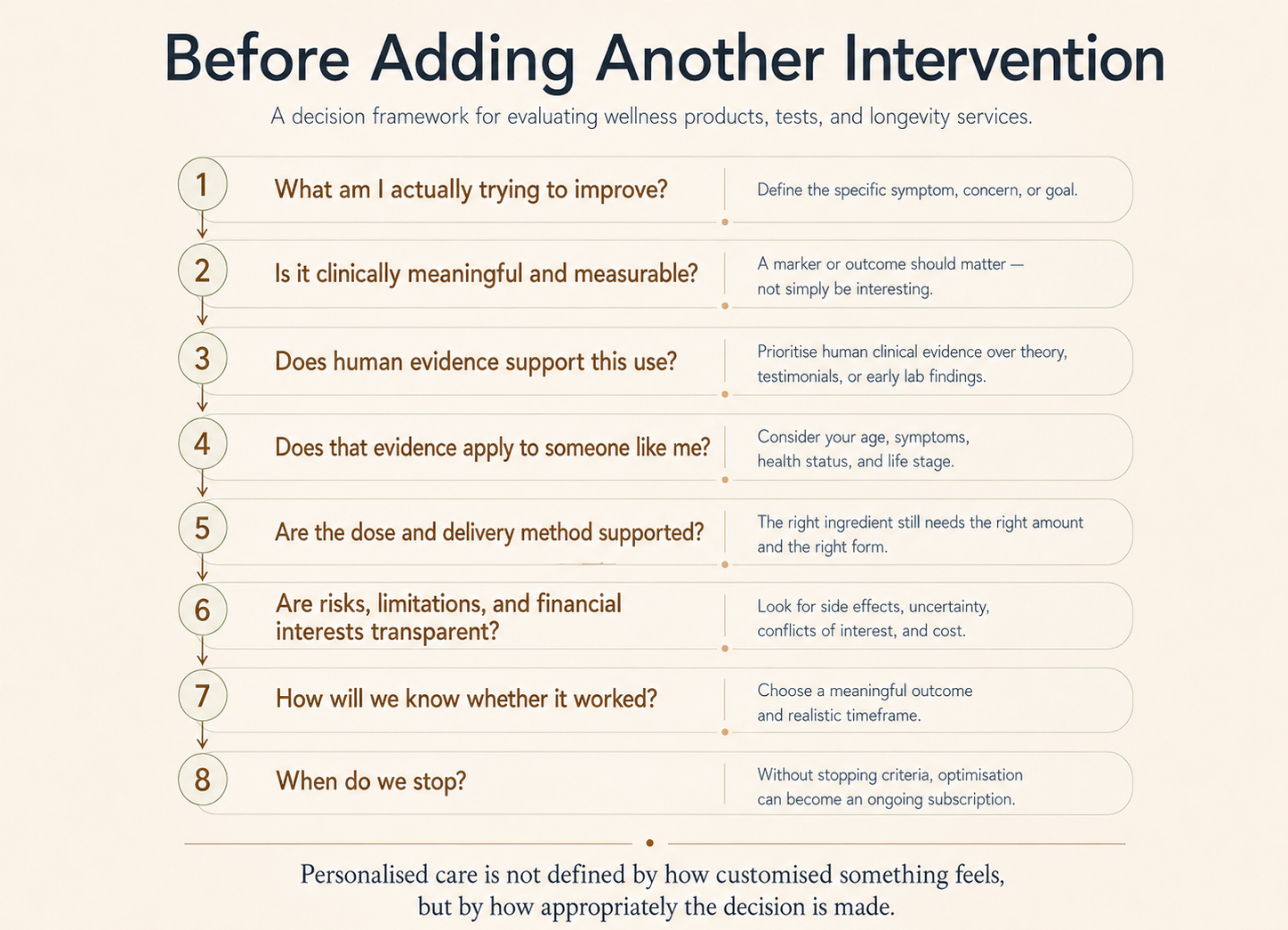
Conclusion
Altogether, wellness and longevity medicine is taking a leap toward addressing identified gaps in conventional healthcare systems by considering individualized approaches, where consumers and patients want to engage with their health and future wellbeing. Instead of waiting for symptoms to progress to a definite diagnosis or poor prognosis, or regretting not taking necessary preventive measures, consumers want to share in the decision-making and have autonomy over how and why they choose a health and wellness product or service. These services and products are steadily entering the healthcare realm, although further investigation could be beneficial before implementation.
However, controversies surrounding wellness culture and social media hype often reinforce the belief that consumers should start a service or product immediately, even before clinical context, medical history, symptoms, scientific research, and clinical trial evidence support broad claims about non-specific symptoms.
Moreover, the balance between participating in a moderate sense and focusing on your health and wellness becomes blurred when one product or service becomes a long-term commitment of continuous optimization. In turn, it becomes a continuous path of meeting a target score, achieving a weekly goal, monitoring biomarkers, adapting dosages and products as you see fit without the necessary professional healthcare guidance, which in essence could be driven by fear, aspirations, social acceptance, and the belief that you are ultimately changing your life, albeit through quick-fix methods.
The most important takeaway is not choosing between traditional medicinal approaches and wellness interventions, but rather considering clinical context, your personal medical history, lifestyle factors, environment, and genetics. Along with making informed, guided decisions about the product or service you choose to address a specific symptom of a clinically determined or diagnosed condition.
Ask yourself: Is the product or service backed by scientific evidence, including precise clinical outcomes, long-term data, safety, and dosage recommendations for specific population groups, or is it still in an experimental phase, supported only by observational and anecdotal information driven by social media endorsements?
Final takeaway and reminder:
Often, the most essential form of health optimization isn't adding more supplements, peptides, testing, or continuously monitoring biomarkers; it's recognizing when intervention isn't the only option and when lifestyle factors can be reviewed as the foundational change that may need adjustment. Also, recognize when wellness information is merely interesting, when future advances in healthcare are discussed, and when interventions are scientifically credible, to support informed decision-making.
- Albarqouni, L., Arab-Zozani, M., Abukmail, E., Greenwood, H., Pathirana, T., Clark, J., Kopitowski, K., Johansson, M., Born, K., Lang, E., & Moynihan, R. (2022). Overdiagnosis and overuse of diagnostic and screening tests in low-income and middle-income countries: a scoping review. BMJ global health, 7(10), e008696. https://doi.org/10.1136/bmjgh-2022-008696
- Alemu, F. W., Yuan, J., Kadish, S., Son, S., Khan, S. S., Nulla, S. M., Nicholson, K., Wilk, P., Thornton, J. S., & Ali, S. (2024). Social determinants of unmet need for primary care: a systematic review. Systematic reviews, 13(1), 252. https://doi.org/10.1186/s13643-024-02647-5
- Allem, J. (2024). The need for research on the wellness industry’s impact on health decisions. American Journal of Preventive Medicine, 67(4), 627–630. https://doi.org/10.1016/j.amepre.2024.05.010
- Bonnes, S. L. R., Strauss, T., Palmer, A. K., Hurt, R. T., Island, L., Goshen, A., Wang, L. Y. T., Kirkland, J. L., Bischof, E., & Maier, A. B. (2024). Establishing healthy longevity clinics in publicly funded hospitals. GeroScience, 46(5), 4217–4223. https://doi.org/10.1007/s11357-024-01132-0
- Cacciatore, S., Mao, S., Nuñez, M. V., Massaro, C., Spadafora, L., Bernardi, M., Perone, F., Sabouret, P., Biondi-Zoccai, G., Banach, M., Calvani, R., Tosato, M., Marzetti, E., & Landi, F. (2025). Urban health inequities and healthy longevity: traditional and emerging risk factors across the cities and policy implications. Aging clinical and experimental research, 37(1), 143. https://doi.org/10.1007/s40520-025-03052-1
- Cocchi, C., Zazzara, M. B., Levati, E., Calvani, R., & Onder, G. (2025). How to promote healthy aging across the life cycle. European Journal of Internal Medicine, 135, 5–13. https://doi.org/10.1016/j.ejim.2025.03.003
- Garmany, A., & Terzic, A. (2024). Global Healthspan-Lifespan Gaps Among 183 World Health Organization Member States. JAMA network open, 7(12), e2450241. https://doi.org/10.1001/jamanetworkopen.2024.50241
- Hoffman, S. J., & Tan, C. (2015). Biological, psychological and social processes that explain celebrities' influence on patients' health-related behaviors. Archives of public health = Archives belges de sante publique, 73(1), 3. https://doi.org/10.1186/2049-3258-73-3
- Islam, K. F., Awal, A., Mazumder, H., Munni, U. R., Majumder, K., Afroz, K., Tabassum, M. N., & Hossain, M. M. (2023). Social cognitive theory-based health promotion in primary care practice: A scoping review. Heliyon, 9(4), e14889. https://doi.org/10.1016/j.heliyon.2023.e14889
- Karreman, N., Zenone, M., Maani, N., & Hawkins, B. (2026). The Political Economy of Wellness: Commercial determinants of a burgeoning industry. Milbank Quarterly, 104(2), 361–385. https://doi.org/10.1111/1468-0009.70088
- Lim, M. S. C., Molenaar, A., Brennan, L., Reid, M., & McCaffrey, T. (2022). Young Adults' Use of Different Social Media Platforms for Health Information: Insights From Web-Based Conversations. Journal of medical Internet research, 24(1), e23656. https://doi.org/10.2196/23656
- Mathews, M., Ryan, D., Deslauriers, V., Moritz, L. R., Xiao, J., Breton, M., Green, M. E., Isenor, J. E., Marshall, E. G., Buote, R., Meredith, L., Smithman, M. A., Ashcroft, R., Bowles, S., Guénette, L., Lawrence, L., Martin-Misener, R., McCarthy, L. M., McDougall, B., Mooney, M., … Stringer, K. (2024). Care-seeking experiences of unattached patients in the Canadian health care system: Qualitative study. Canadian family physician Medecin de famille canadien, 70(6), 396–403. https://doi.org/10.46747/cfp.7006396
- Mozafari, S., Yang, A., & Talaei-Khoei, J. (2024). Health Locus of Control and Medical Behavioral Interventions: Systematic review and recommendations. Interactive Journal of Medical Research, 13, e52287. https://doi.org/10.2196/52287
- Pilli, L., Veldwijk, J., Swait, J., Donkers, B., & De Bekker-Grob, E. (2024b). Sources and processes of social influence on health-related choices: A systematic review based on a social-interdependent choice paradigm. Social Science & Medicine, 361, 117360. https://doi.org/10.1016/j.socscimed.2024.117360
- Powell, J., & Pring, T. (2023). The impact of social media influencers on health outcomes: Systematic review. Social Science & Medicine, 340, 116472. https://doi.org/10.1016/j.socscimed.2023.116472
- Ricke, J. N., & Seifert, R. (2025). Disinformation on dietary supplements by German influencers on Instagram. Naunyn-Schmiedeberg's archives of pharmacology, 398(5), 5629–5647. https://doi.org/10.1007/s00210-024-03616-4
- Ringel, C. B., Ringel, M. S., & Caplan, A. L. (2025). Why We Can Thrive past Seventy-Five: In Favor of Efforts to Extend the Human Lifespan. The Hastings Center report, 55(3), 2–6. https://doi.org/10.1002/hast.5007
- Rodoreda-Pallàs, B., Morín-Fraile, V., Fuster-Casanovas, A., Miró Catalina, Q., Vidal-Alaball, J., Velasco-Márquez, E., Sola Reguant, L., Musarra Carvajal, L., Mas Comas, G., & Lumillo-Gutierrez, I. (2026). Healthcare utilization and cost analysis by social determinants of health: a prospective cohort study in Catalonia, Spain. BMC health services research, 26(1), 173. https://doi.org/10.1186/s12913-025-13953-6
- Tsutsumi, Y., Tsujimoto, Y., Tajika, A., Omae, K., Fujii, T., Onishi, A., Kataoka, Y., Katsura, M., Noma, H., Sahker, E., Ostinelli, E. G., & Furukawa, T. A. (2023). Proportion attributable to contextual effects in general medicine: a meta-epidemiological study based on Cochrane reviews. BMJ evidence-based medicine, 28(1), 40–47. https://doi.org/10.1136/bmjebm-2021-111861
- Zielińska-Tomczak, Ł., Przymuszała, P., Krasińska, A., Klimek, W., Marciniak, R., & Cerbin-Koczorowska, M. (2026). Social learning theory application and potential in health education conducted by healthcare workers on TikTok - a content analysis observational study. BMC public health, 26(1), 1965. https://doi.org/10.1186/s12889-026-27697-3